Beyond Cultural Assimilation: The Truth of Buddha Avatar

"Hindu scriptures only accepted the Buddha as an avatar as a reactionary measure to subvert the growing socio-political influence of the Buddhist order."
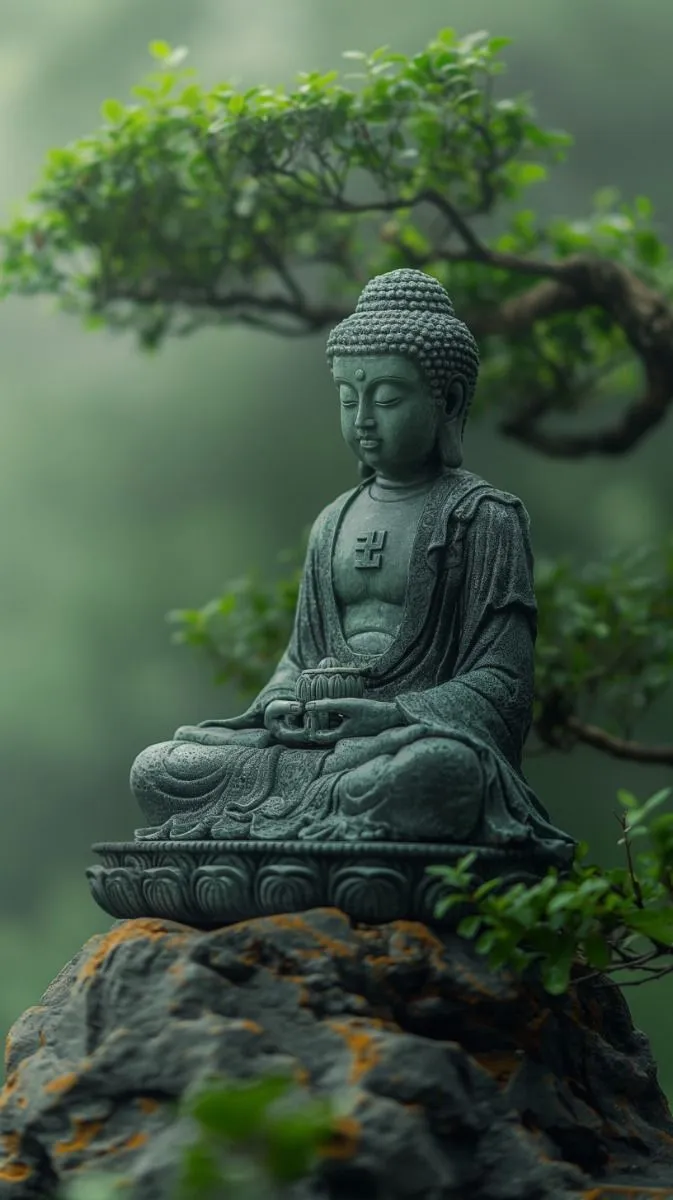
The inclusion of Bhagavan Buddha in Hindu scriptures was not a political stunt for cultural assimilation. Primary texts from both traditions reveal a deep, mutually recognized theological reality.
The Hindu Puranas describe multiple figures under the broader concept of "Buddha avatara" (like Siddhartha Gautama , Arihan , Mayamoha and others) while the Mahayana Buddhist Scripture Lalitavistara Sutra identifies Gautama Buddha with Buddha as possesing the self nature and cosmic strength of Bhagavan Narayana (Vishnu). This is pattern of Lalitavistara Sutra closely resembles how Bhagavan Rama is described in Valmiki Ramayana.
Detailed Investigation
In the mainstream academic History especially in Indology we are often told that this adaptation of Bhagavan Buddha as avatar of Bhagavan Vishnu was a due to the socio-political game of chess as a reactionary approach towards the Buddhists. However , if we bypass the modern arguements and look directly into the main primary sources we find a completely different picture.
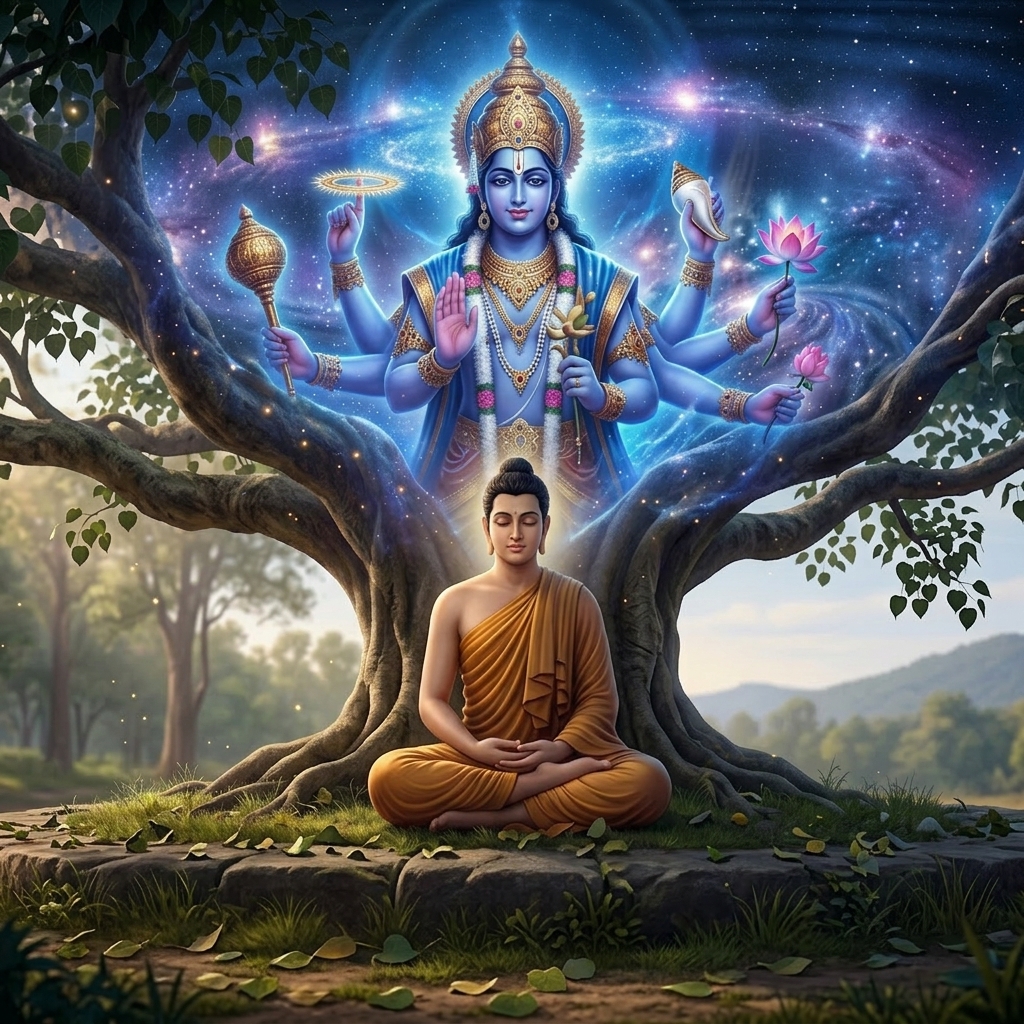
1. Decoupling the Title: The Reality of Multiple "Buddhas"
In Sanskrit language, the term “Buddha” is not a personal name, rather it is a spiritual title which means “The Enlightened One.” Historically this was used by rishis, pandits, and munis, thus Hindu scriptures records multiple distinct figures under the "Buddha Avatar" umbrella. This presence of multiple figures under the same Buddha avatar umbrella is not unique; rather, it mirrors how even Bhagavan Varaha is revered in separate historical manifestations (such as Neela, Shweta, and Adi Varaha) while representing the same singular divine tattva (truth).
- Bhagavan Siddhartha Gautama: He was a prince of Kapilvastu who gained englightenment under the Mahabodhi tree of present-day Gaya. He is often considered the 9th avatar in the Dashavatara lists. In Puranas he is remembered as a deluder of Asuras , Daityas and other demonic forces. Even in Buddhist text Mahavastu he indeed either convert or subdue the demonic beings like Mara ,Asura Rahu ,and Asura Vemacitrin.
- Bhagavan Arihan Buddha: He is the avatar who comes to delude the residents of Three Cities during the Tripurasura episode to leave Vedic fold before Bhagavan Shiva's destruction of the Three Cities.
- Bhagavan Mayamoha: He is a deceptive manifestation from Bhagvan Vishnu's body in the Vishnu Purana whose objective to deceive the Daitya army of Hrada inorder to help devas win the war.
- The Himalayan Adi-Buddha: This is a avatar of Bhagavan Vishnu in Shaiva Tantric Yamala texts, who acted as a Guru to Rishi Vashistha in Tibet, teaching the Cinachara methods to worship Maa Tara and other goddesses.
(Note: The common epithet "Sugata" simply means "The Well-Gone" and is a title applied to all Buddhas, not a separate historical entity).
2. The Buddhist Reciprocity: Buddha as Narayana
The absolute debunking of the "forced assimilation" myth comes from Buddhist literature itself. In the Mahayana Vaipulya tradition, specifically within the Sanskrit recension of the Lalitavistara Sutra, the text explicitly identifies the Bodhisattva Siddhartha with Narayana.
Lalitavistara Sutra 7.61 (The Vision of Sage Asita):
असितः प्रेक्षति जम्बुसाह्वयमिदं दिव्येन वै चक्षुषा
सोऽद्राक्षीत्कपिलाह्वये पुरवरे शुद्धोदनस्यालये ।
जातो लक्षणपुण्यतेजभरितो नारायणस्थामवान्
दृष्ट्वा चात्तमना उदग्रमनसः स्थामास्य संवर्धितः ॥ ७.६१ ॥
Asita, looking at Jambudvipa with his divine eye, beheld the child born in the abode of Shuddhodana — filled with the splendor of meritorious signs and possessing the inherent strength of Narayana
Lalitavistara Sutra 7.66:
पुत्रस्ते वररूप पारमिगतो जातो महातेजवान्
द्वात्रिंशद्वरलक्षणैः कवचितो नारायणस्थामवान् ।
तं द्रष्टुं हि ममेप्सितं नरपते सर्वार्थसिद्धं शिशुम्
इत्यर्थं समुपागतोऽस्मि नृपते नास्त्यन्यकार्यं मम ॥ ७.६६ ॥
O King, your son of beautiful form has been born, who has reached the pinnacle of perfection and is possessed of great splendor. He is endowed with the thirty-two auspicious marks and possesses the immense strength of Narayana
Lalitavistara Sutra 15.21: Bodhisattva's Identification with Narayana by Yaksha Council
वज्रदृढ अभेद्य नारायणो आत्मभावो गुरु
वीर्यबलौपेतु सोऽकम्पितो सर्वसत्त्वोत्तमः ।
गिरिवर महमेरु उत्पाट्य शक्यं नभे धारितुं केनचित्न तु
जिनगुणमेरु शैलैर्गुरुः पुण्यज्ञानाश्रितः शक्य नेतुं क्वचित् ॥ १५.२१ ॥
Firm as a diamond, indestructible,Narayana, self-natured , a Guru , endowed with heroic strength and power, he (bodhisattva siddhartha) is unshakable and the highest of all living beings. Someone might be able to uproot the great mountain king Mahameru and hold it up in the sky; but no one can ever shake the Conqueror (Jina), who is heavier than the Meru mountain due to his virtues, and is firmly anchored in merit and wisdom.
Lalitavistara Sutra Chapter 26 b/w verse 51 and 52
महानारायणबलोपेतत्वान्महानारायण इत्युच्यते ।
Because he is endowed with the power of Maha-Narayana, he is called Maha-Narayana
Conclusion
The identification of Bhagavan Buddha with Bhagavan Narayana was not a late-stage Puranic hijacking. It was a deeply theological, cross-pollinated recognition present in the core texts of both traditions simultaneously. The Buddha avatar was an expression of a shared divine truth that the modern generation has simply forgotten.
Sources & References
1) Lalitavistara Sutra (Sanskrit recension) Chapters 7, 15, and 26. (Gautama Buddha as Narayana)
2) Vishnu Purana, Book 3, Chapter 18 (Account of Mayamoha and the Daityas).
3) Shiva Purana Section 2.5 - Rudra-saṃhitā (5): Yuddha-khaṇḍa Chapter 1-6
(Destruction of 3 Cities)
4) Rudrayamala Tantra (Account of Rishi Vashistha encountering the Buddha in Tibet)
5) Agni Purana Chapter 16 (Buddha avatar is Son of King Shuddhodana)
6) Mahavastu (great story) Volume III Chapter XIII - The conversion of the Asuras

Sachit Varshney
120Advaita Vedantin with a passion for non-dual philosophy, exploring Hindu thought beyond Hindutva, orthodoxy, reformism, or Ambedkarite frameworks. Enthusiast of Sikh and Buddhist texts, weaving insights across traditions with curiosity and depth.
Comments & Discussion 2