Myth of Ravana as an "Anarya Mulnivasi"
"Ravana was an indigenous Anarya (non-Aryan) Mulnivasi (original inhabitant) of India who fought against the 'invading' Aryan prince, Shri Ram."
In the Sundara Kanda of the Valmiki Ramayana, Hanuman explicitly observed Vedic rituals being performed inside Lanka. Furthermore, Vibhishana described Ravana as a deeply learned Vedic scholar rather than a Mlechcha, and Ravana's own wife recognized him as an Arya in the Yuddha Kanda.
Detailed Investigation
Valmiki Ramayana (Yuddha Kanda, 6.110.4):
After Ravana falls on the battlefield, his chief queen, Mandodari, rushes to his side in deep lamentation and explicitly addresses him as Aryaputra.
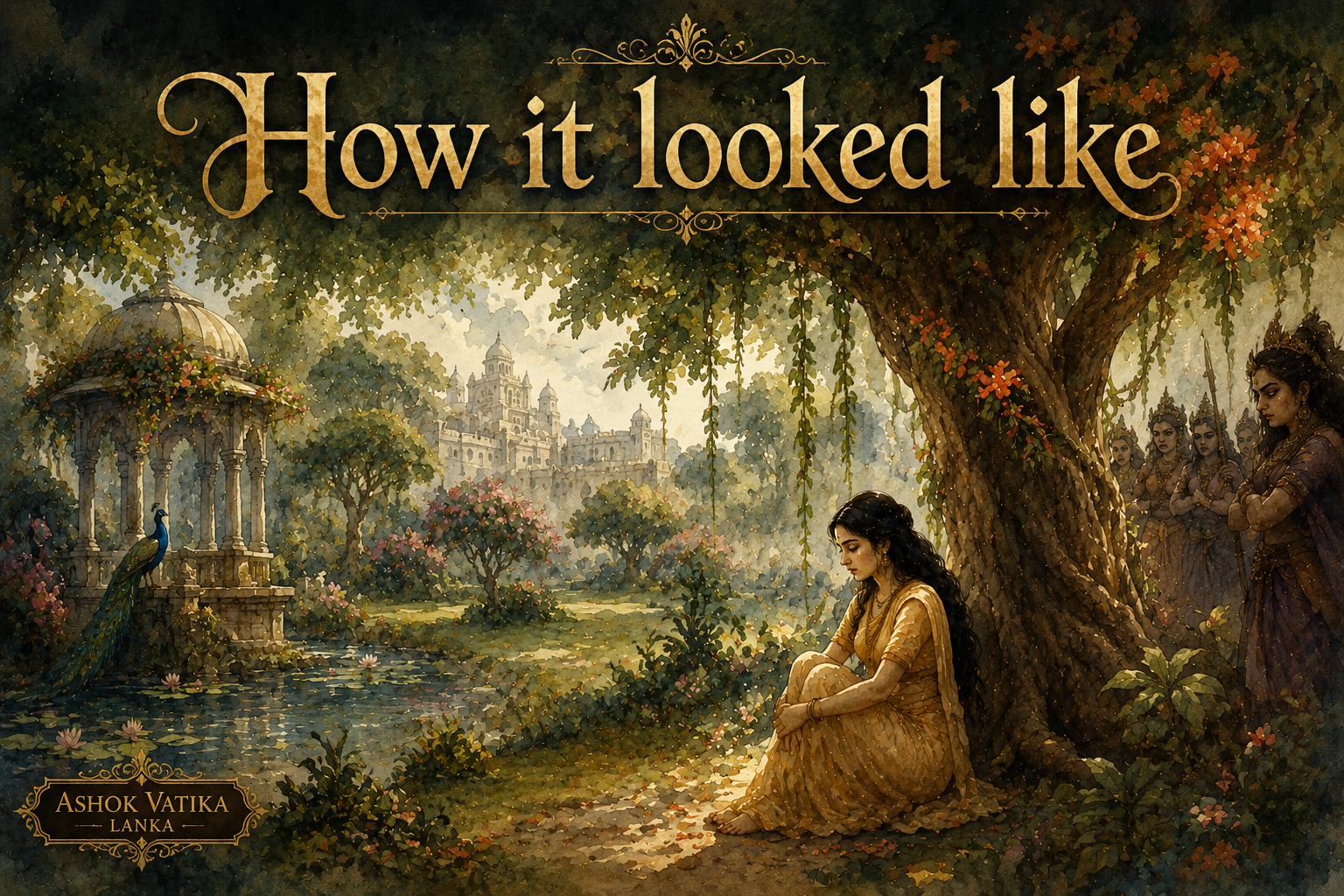
Valmiki Ramayana (Sundara Kanda, 5.18.2): When Hanuman first enters the golden city of Lanka at night, he discovers that the city is not a lawless, non-Vedic tribal settlement, but a highly disciplined center of Vedic scholarship. He literally hears the synchronized, rhythmic chanting of the Vedas echoing from the palaces of the Rakshasas
Valmiki Ramayana (Yuddha Kanda, 6.109.23):
"He maintained a perpetually sacred fire and practiced great religious austerities. He completely mastered the Vedas and was highly proficient in ritual acts"
The Valmiki Ramayana is the sole primary source detailing the war between Shri Ram and Ravana, and nowhere does this foundational text state that Ravana was a non-Vedic Mlechcha. On the contrary, both his wife and his brother explicitly affirmed that Ravana was a devoted follower of Vedic Dharma, despite his unrighteous deeds
*In the Vedic tradition, a wife calls her husband Aryaputra.
Sources & References
Valmiki Ramayana
Saptarshi Pahari
280M.Sc. Physics student focused on Electronics | Independent researcher in structural philosophy & traditional history | Essayist & author of The Anatomy of Social Friction. Saptarshi Pahari is a traditionalist writer and analyst dedicated to the defense of orthodox Hindu theology
Comments & Discussion 16