Ravan Is Dalit
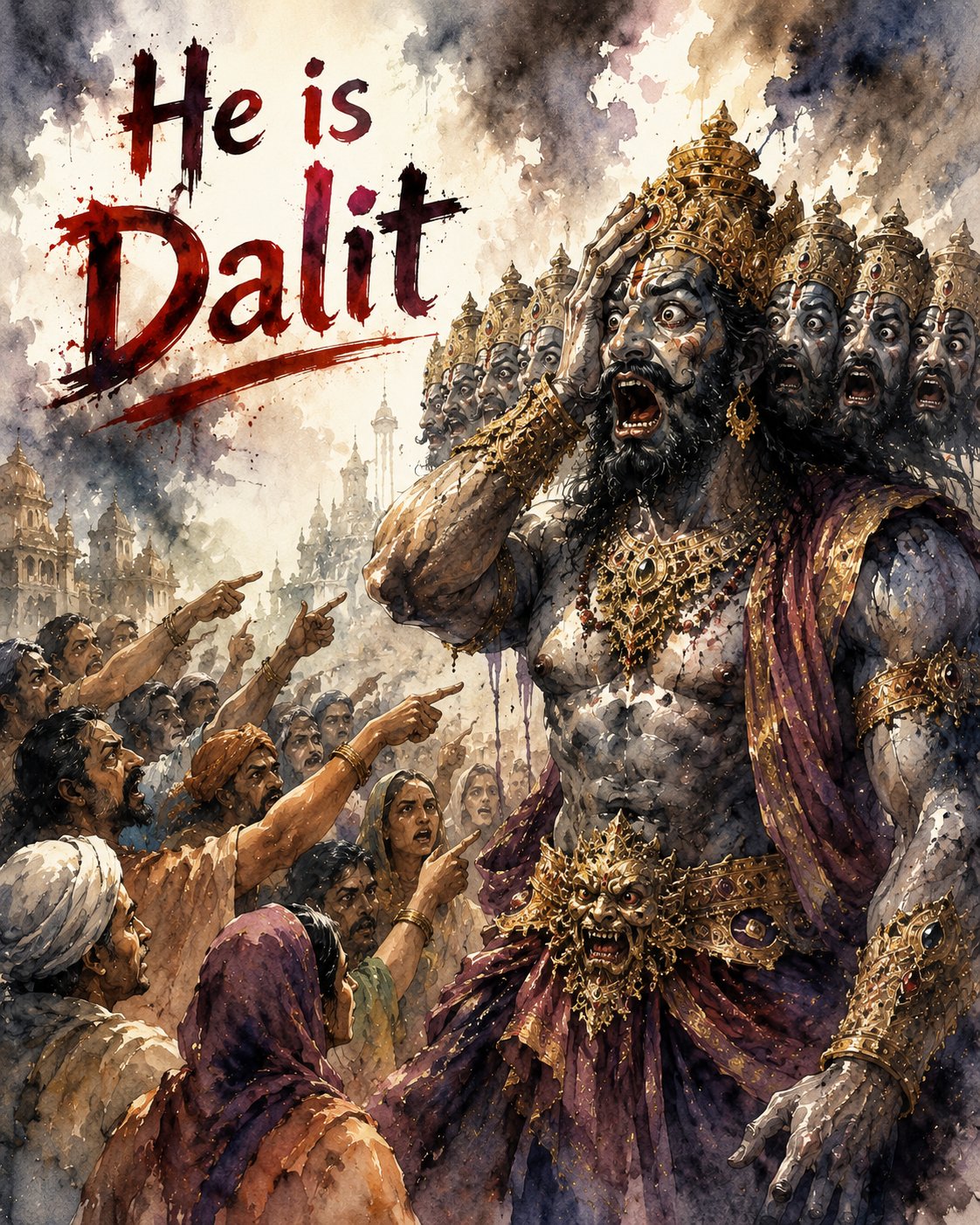
"In recent socio political discoveries, certain fringe groups, claim that Ravan was Dalit(A low caste). According to this modern claim, The War in Ramayan was not a battle of Dharma (righteousness) versus Adharma (unrighteousness), but rather a conflict where a Dalit King (Ravan) was demonized and slain by a dominant caste prince (Lord Ram)."
A straight forward answer, this claim is completely false and is entirely unsupported by any classical Hindu Texts, including the original Valmiki Ramayana, the Puranas or regional recensions like the Kamba Ramayana.
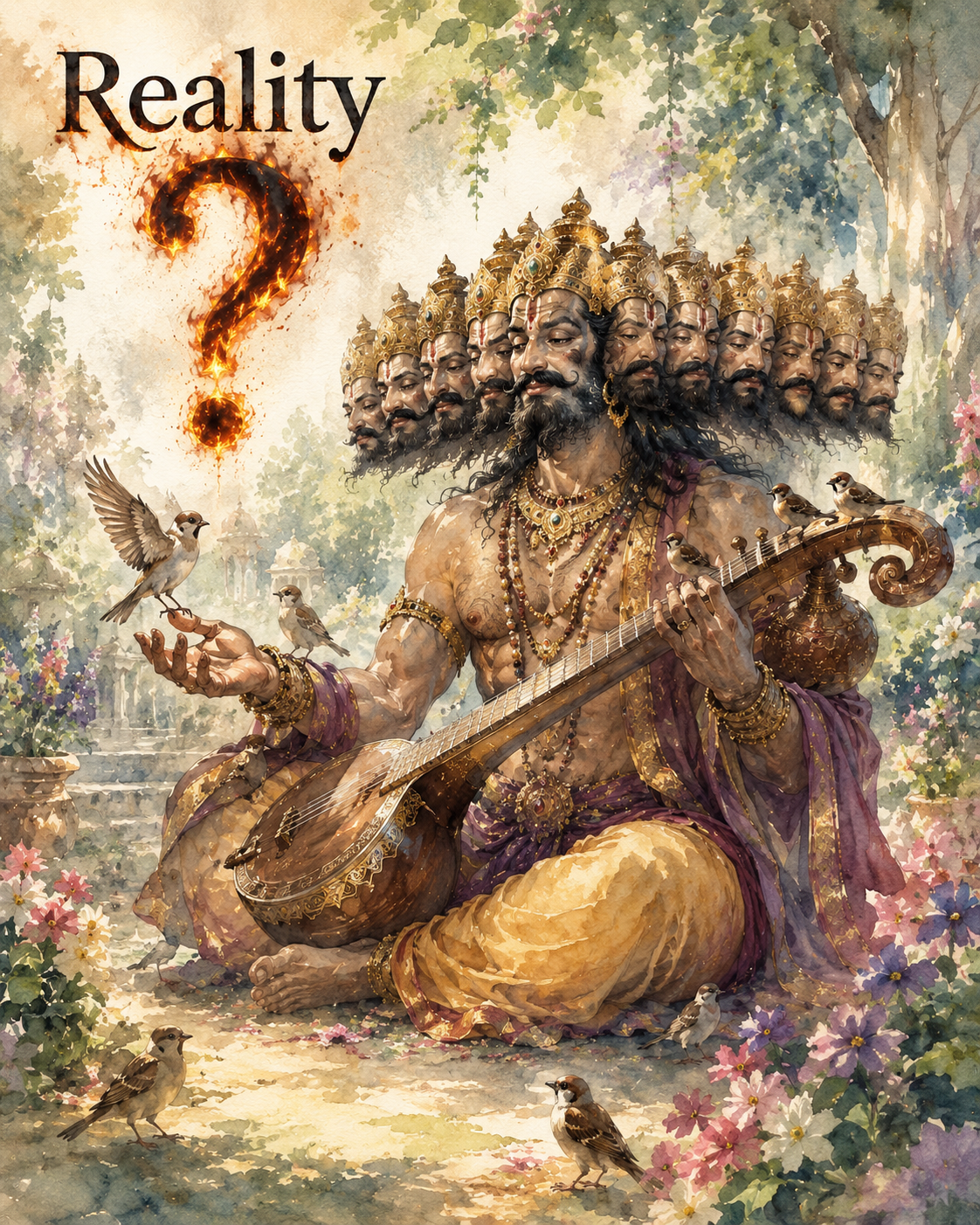
Scripturally, Ravan was a Maha-Brahmin (a Brahmin of the highest order) by paternal descent. He was highly reversed for his supreme knowledge of the four Vedas, his mastery over the arts and his extreme devotion to Lord Shiv.
The lebal of Rakshasa(Demon) attributed to him in Hindu Scriptures does not denote a low social caste or an untouchable status, rather it refers to his maternal species and his unrighteousness behavior traits.
Detailed Investigation
The myth of Ravan being Dalit stems from modern identity politics and a lack of familiarity with classical Sanskrit Texts. When we analyze the scriptures objectively, the claim falls apart on multiple fronts:
1. Paternal Genealogy (The Blood line of Sages)
According to the Uttara Kanda of the Valmiki Ramayana, Ravan's lineage traces directly back to Brahma (Creator).
Great Grandfather: Lord Brahma Grandfather: Sage Pulastya, one of the Saptarishis (one of the 7 great celestial sages). Father: Sage Vishrava, a highly revered Vedic Rishi.
Because his father was a Brahmin Rishi, Ravan inherited the status of a Brahmin. In ancient Vedic society, he was recognized as a Saraswat Brahmin.
=============================
2. Maternal Lineage (The Rakshasa Connection)
Ravan's mother was Kaikashi, a princess of the Rakshsa clan. In ancient scriptural geography and metaphysics, Rakshas, Devs, Yakshas, and Gandhrarvas were distinct celestial or terrestrial humanoid species, not human castes. Because of his mixed parentage, Ravan is often described in the Puranas as Brahmin-Rakshasa a being with the intellect and birthright of a Bramin but the aggressive, passionate nature of the A Rakshasa.
=============================
3. A Master Of Vedas
A core requirement of a Vedic Brahmin was the mastery of sacred texts. Ravan was notoriously brilliant. He mastered the 4 Vedas and 6 Shastras.
•He is credited with organizing the verses of the Veds with their musical notes (Svara).
•He composed the Shiv Tandav Stotram, one of the most complex and revered Sanskrit hymns dedicated to Lord Shiva.
•He was an expert Astrologer and Authored Texts like the Ravan Samhita, an ancient book on Hindu astronomy and Arka Prakasham, a treatise on Siddha medicine.
=============================
4. Why Lord Ram Performed Penance After Killing Ravan
In Hinduism, killing a Brahmin is considered one of the ultimate sins, known as Brahmahatya Dosha. After Lord Ram killed Ravan in battle, he had to perform strict penance and rituals to cleanse himself of the Sin of killing a Brahmin.
Sources & References
Sources:
1. Valmiki Ramayana: Uttara Kanda, Chapter 9 and 10 This section explicitly details the birth and lineage of Ravan.
2. Shrimad Bhagavatam: Canto 7, Chapter 1 The Puranas explain the metaphysical cosmic origin of Ravan
Also From Local Traditions and Living History like Bisrakh (UP) is believed to be birth place of Ravan and Saraswat Brahmin Communities historically refused to celebrate Duseehra because they views Ravan as a highly learned kinsmen who fell from grace due to his ego and lust, but the whose scholarly roots remain undeniable.
Saffron Files
422

Comments & Discussion 2