Discover Your Perfect Yoga Path

When you hear the words Yoga, what comes in your mind? For most of us , it's a bri
When you hear the words Yoga, what comes in your mind? For most of us , it's a some people trying to control their breathing, don't some weird movements, chanting Hmmmm..
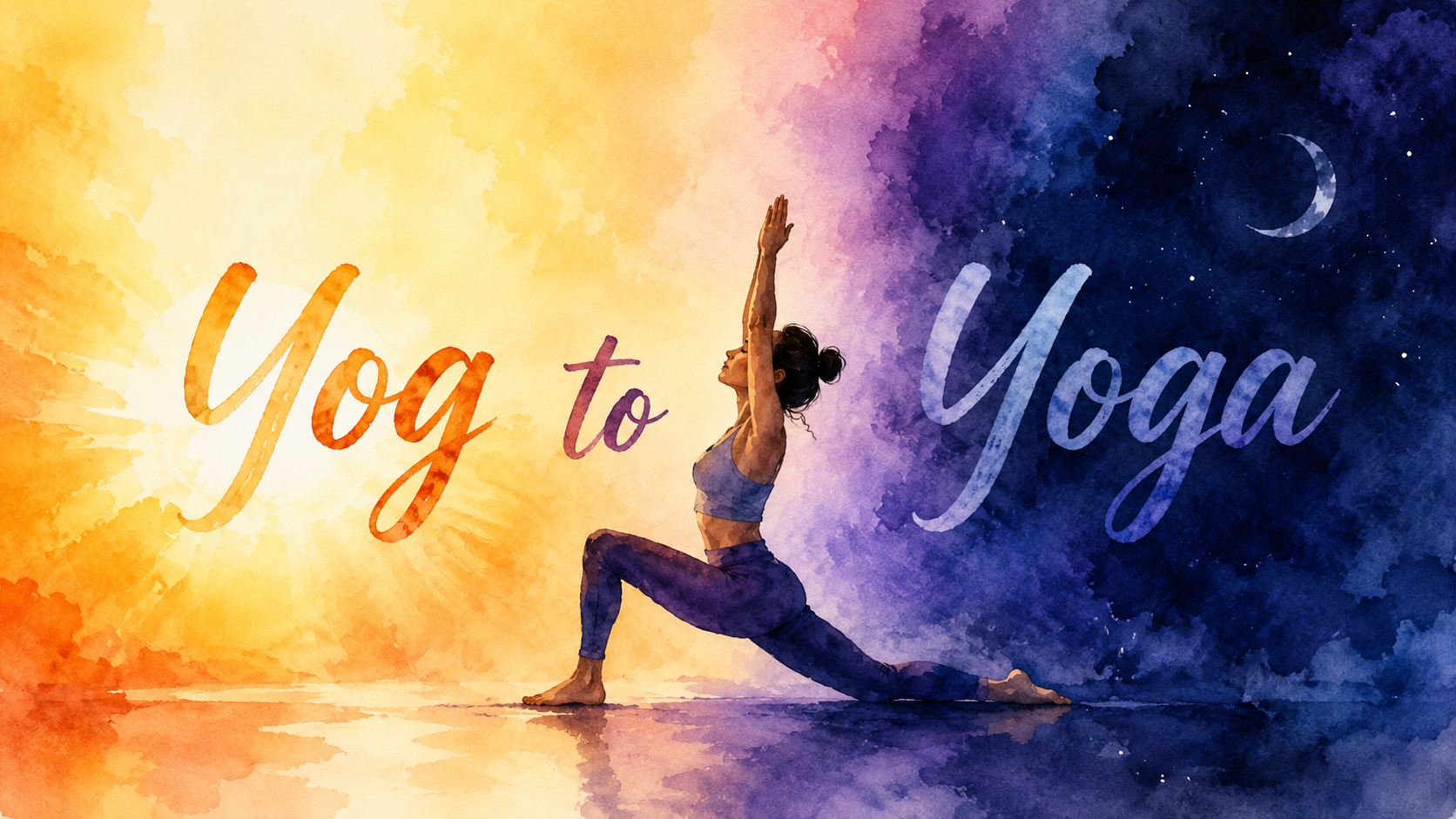
But here is a secret that might change how you look at the entire tradition, physical postures are just tiny fraction of what yoga actually is. In its original philosophy, yoga simply means Union, a way to connect your mind, body and soul to something better.
Because Human being are weird completely differently, ancient Hindu Philosophy didn't prescribe a one size fits all routine. Instead, it laid out distinct paths based entirely on human psychology. Whether you are an analytical thinker who questions everything, an action oriented doer who cannot sit still or a deeply empathetic feeler moved by art and emotion. There is a specific path designed to fit your unique metal DNA.
Let's Dive Into The Three Major Paths - Karam, Bhakti and Jnana, and find out exactly which one matches your personality profile.
1.Karma Yoga : Path Of Action (The Doer)
Do you get incredibly restless when you have to sit still for too long? When a problem arises, is your immediate instinct to jump up and fix it rather than sit around talking about it? If yes welcome to Karma Yoga.
In Sanskrit the word Karma simply means Action. Karma Yoga is the path of reaching spiritual growth and mental peace through your daily work, duties, and actions.
The Core Secret: "DOING WITHOUT DEMANDING."
The ultimate handbook for Karma Yoga is the Bhagavad Gita. In it Shri Krishna gives a piece of advice that is a total game changer for modern stress.
"You have a right to your actions, but never to the fruit of your actions."
Think about how much anxiety we experience daily. It usually isn't the work stresses us out, it's the obsession with the result. We worry about what others thinks, whether we will succeed or if we will get the recognition we desire. Karma Yoga asks you to shift your focus entirely. Pour 100% of your energy, love and effort into the task right in front of you and then you mentally let go of the outcome. You treat your work as an offering to the universe.
Signs You Are A Karma Yogi: 1. You show people you care through your actions rather than long emotional speech. 2. You feel happiest when you are being productive, volunteering or building something. 3. You hate office politics and wish people would just focus on getting the job done.
How to practice it?
You don't need to quit your job and move to an ashram to do this. You can practice Karma Yoga at your desk, in your kitchen or at school.
•Next time you do a choice, like washing the dishes or cleaning your room, do it with total presence. Don't rush through it to get to the next thing. Treat the act of cleaning as the reward itself. Help some one with out expecting Thanks in return or any recognition.
============================
2. Bhakti Yoga: The Path of Devotion (The Feeler)
Now, let's flip the script. Maybe you aren't driven by pure logic or restless action. Maybe you are someone who feels the world deeply. You get goosebumps when you hear a beautiful piece of music, you cry during emotional movie scenes and you possess a massive reservoir of empathy. If you are a person ruled by the heart, Bahkti Yoga is your home.
Bhakti is the path of love, devotion and absolute surrender to a higher power the Divine. It doesn't ask you to suppress your emotions, it asks you to channal them. Instead of scattering your emotional energy on temporary, worldly things that might break your heart, you direct that intense love towards the Divine, a cosmic ideal or the universe itself.
What makes Bhakti Yoga beautiful and accessible is that it allows you to connect with the Divine Reality in whatever way feels natural to you. You don't have to fear God. You can look at the Divine as a protective parent, a loyal friend, a playful child or a beloved companion.
Because it is purely based on love, there are no rigid rules or complex intellectual debates here. If you sing a prayer out of tune but with a pure heart, it carries more power than a flawless chant delivered with no feeling.
Sign You Are A Bhakti Yogi: 1. You are deeply emotional, intuitive and sensitive to the vibes of people around you. 2. You connect with spiritual through music, chanting, poetry or rituals. 3. You value relationships, love and community far above material Success or intellectual debates.
How to practice it?
•Take five minutes to sit in absolute gratitude. Focus on the fact that you are alive, breathing and supported by this vast universe. Listen to a devotional music, a powerful mantra or any music that elevates your soul and let yourself fully feel the emotion behind it.
============================
3. Jnana Yoga: The Path of Knowledge (The Thinker)
If someone tells you a fact, is your first response to nod along, or does a giant question mark pop up in your brain? Do you love reading Deep Philosophy, Analyzing Psychology and asking the big, uncomfortable questions like, "Who Am I Really? What Is Purpose Of All Of This?" If you have an analytical, sharp mind that refuses to accept superficial answers, you are wired for Jnana(Gyana) Yoga.
It often called the most difficult path because it requires intense mental discipline. It is the path of using the intellect to pierce through illusions and realize the ultimate truth.
A Jnana Yogi uses a famous tool found in the Upanishads called "Neti Neti", which translates to "Not this, not this." To find out who you truly are, you start stripping away what you are not:
"Am I this physical body?" No, the body changes constantly, but the 'I' inside stays the same.
"Am I my thoughts or emotions?" No, thoughts and emotions come and go like clouds, but I am the one watching them.
"Am I my job title or my grades?" No, those are just labels given by society.
By systematically questioning and discarding there temporary identities, the thinker arrives at the realization of the true, permanent self, the Atman, which is fundamentally connected to the ultimate universal reality, the Brahman.
Signs You Are A Jnana Yogi: 1. You are highly philosophical, skeptical (in a healthy way) and logical. 2. You love reading, learning and having deep, late night conversations about the universe. 3. You can't stand blind faith or rituals that nobody can explain the meaning behind.
How to practice it?
•Next time you feel angry or stressed, don't just react. Step back mentally and ask yourself: "Who is the one feeling angry right now? Am I the angry or am I just the observer of this emotion?" Spend time reading high quality photography, scriptures, or psychology texts that challenge the way you view reality.
The Big Takeaway: You Don't Have To Choose Just One
Here is the best part about Hindu Philosophy: These paths are not walls that keeps you locked in. They are more like ingredients in a recipe. We all have a bit of the Doer, the Feeler and the Thinker inside of us.
•If you are only a Thinkr (Jnana), you can become cold, arrogant and stuck in your head.
•If you are only Feeler (Bhakti), you might become overly emotional or sentimental with out grounding.
•If you are only a Doer (Karma), you might burn yourself out running around without a deeper purpose.
The healthiest approach to life is to find your dominant type and use that as your main anchor, while borrowing beautiful elements from the other paths to create a perfect balanced life.
☆Now your turn, tell me in comment what are you a Doer, a Feeler or a Thinker☆

Saffron Files
422





Comments & Discussion 3