Hinduism Has No Concept of Atheism Just like Other Religions
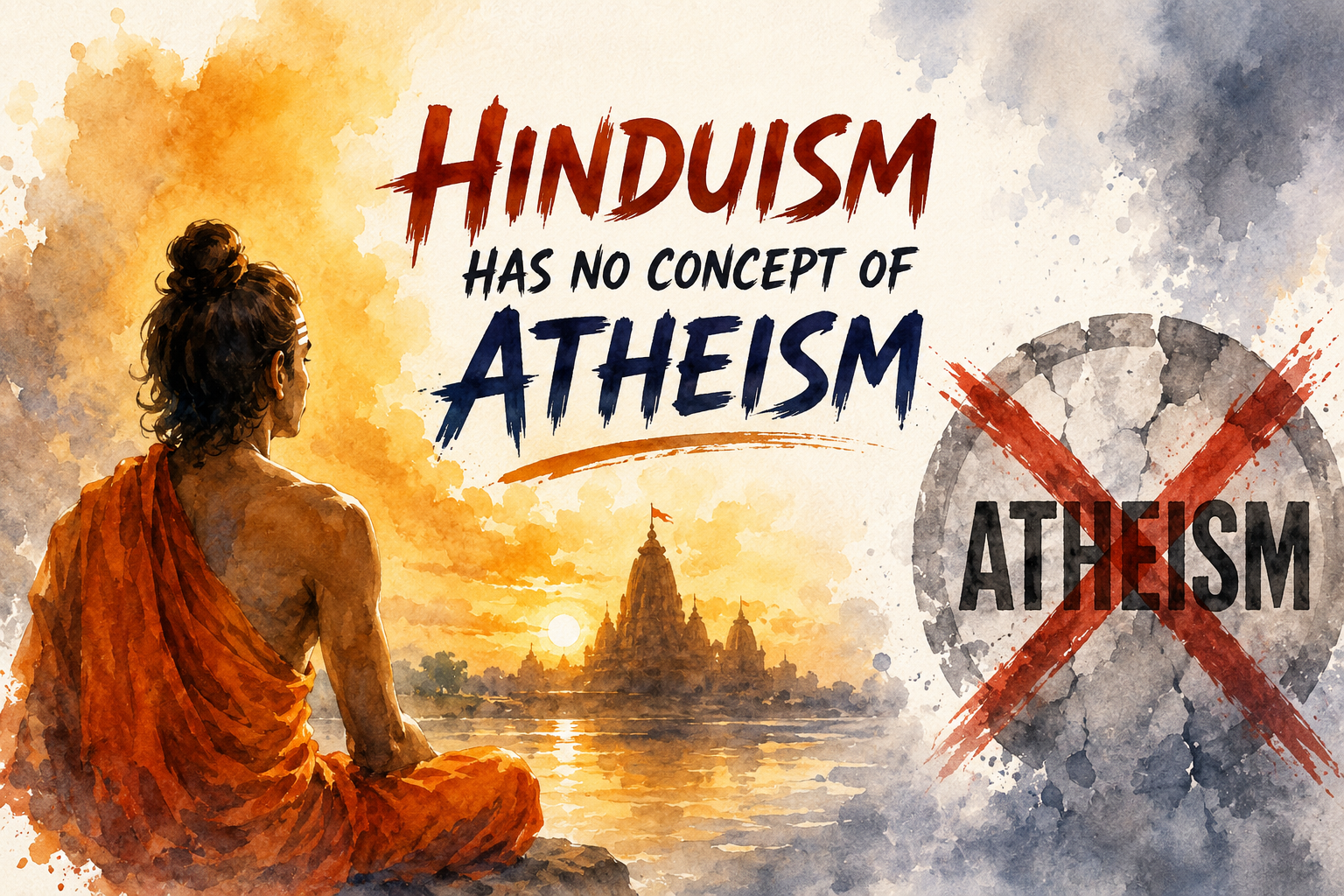
""Hinduism is fundamentally based on belief in God. Therefore, anyone who does not believe in God cannot be considered part of the Hindu Tradition. "
The historical and philosophical record presents a more nuanced picture. Hinduism or Sanatan Dharma has never been a monolithic tradition defined by a single creed or composition of beliefs.
Throughout it's long history, it has accomplished a wide spectrum of views, including deeply devotional, philosophical and non theistic traditions.
Unlike many other Religions that revolve around adherence to a specific doctrine, Hindu thought has traditionally emphasized the pursuit of truth through inquiry, debate and personal understanding.
So, there is no chance that Hinduism is rigid by core, in Hinduism God is not a compulsory belief for everyone, free thinking is allowed. Hindu philosopher never had Limited Viewpoint for life, like other religions.
Detailed Investigation
Among the six classical schools of Hindu philosophy, schools like Samkhya and Purva Mimamsa did not place a creator God at center of teaching. Instead, they focused on concepts such as consciousness, nature, Dharma.
Hindu scriptures also encourage questioning and discussion. The Upanishads and the Bhagavad Gita contain many conversations where seekers ask questions and search for answers instead of blindly accepting teachings. Even the famous Nasadiya Sukta of Rigved reflects this spirit of inquiry by raising questions about the God and Origin of Universe.
This openness allowed different traditions to develop with Hinduism. Some focused on devotion to God, while others focused more on Philosophy and Self realization.
Therefore, the claim that Hinduism has no Concept of Atheism oversimplifies a tradition that has historically accepted a wide variety of beliefs and ideas.
Sources & References
Primary sources:
1. Rigved 10.129(Nasadiya Sikta)
2. Principal Upanishads
3. Bhagavad Gita
4. Samkhya Karika of Ishvarakrishna
5. Purva Mimamsa Sutra of Rishi Jaimini
Secondary Sources:
6. Sarvepalli Radhakrishna, Indian Philosophy
7. Klaus K. Klostermaier, A Survey Of Hinduism
8. Gavin Flood, An Introduction To Hinduism

Saffron Files
422


Comments & Discussion 3