The Inherent Problem with Indian Democracy
The Inherent Problem with Indian Democracy Democracy — what is it? Rule of the people. It originated in ancient Greece, though even there only a...
Democracy — what is it?
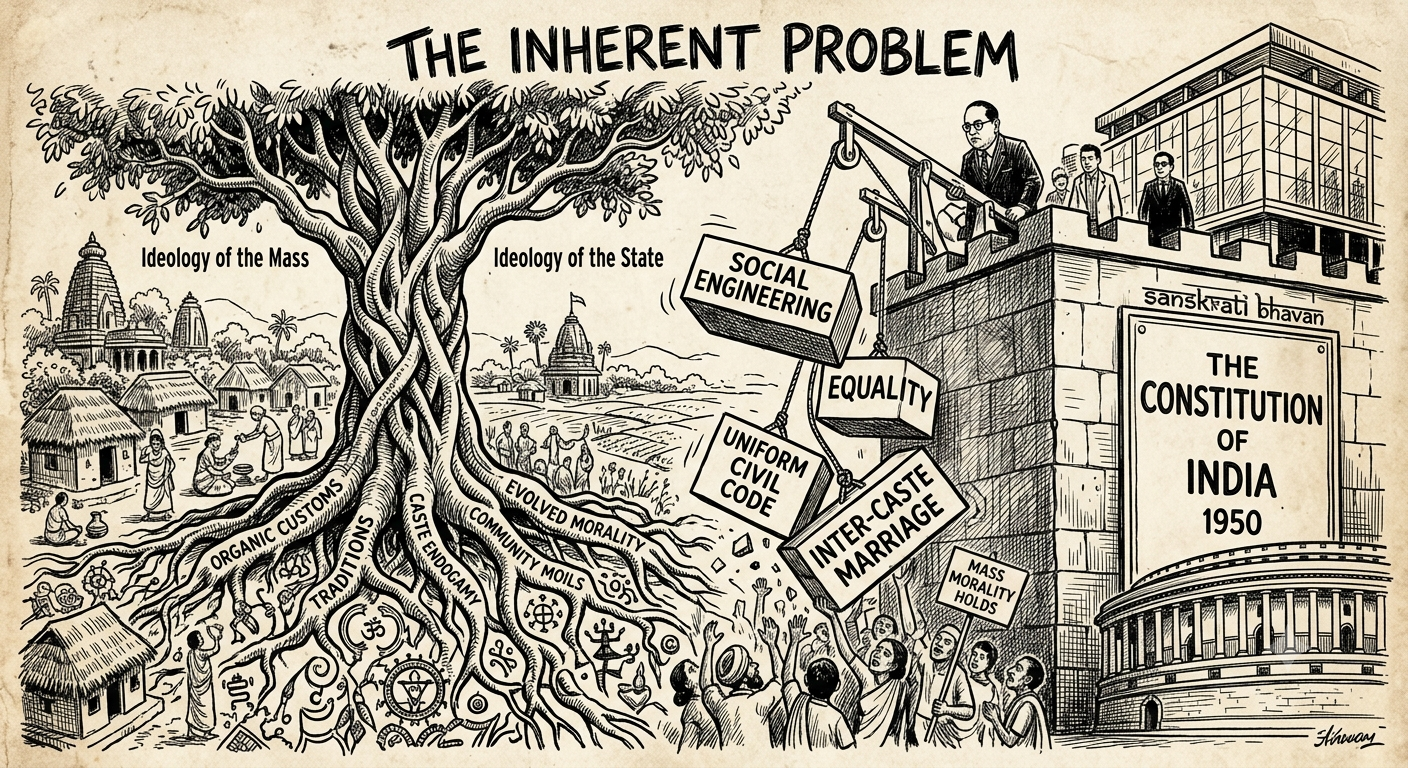
Rule of the people. It originated in ancient Greece, though even there only a limited group (free male citizens) had voting rights. The core idea was that people could choose what they wanted, and the collective will of the majority would guide the state. In ancient Athens, citizens voted directly on policies. The system followed the prevailing morality and customs of the community — what we can call mass ideology: ideas that evolve naturally within villages, families, and social groups without top-down imposition.
Two ideologies
Ideology of the mass: Naturally evolved customs, values, and norms of ordinary people in their daily life.
Ideology of the state: Ideas decided by elites, backed by state power, and enforced through institutions, laws, and education on the broader population.
What is Indian democracy, then?
Can we truly call it "rule of the people"? In India, the masses vote for a candidate from their constituency. That candidate, along with others, then makes policy. But here is the catch: these elected representatives must operate within a Constitution adopted in 1949 — a document that, in many key areas, went against the prevailing social customs and morality of the time.
The Constituent Assembly that adopted the Constitution on 26 November 1949 was not chosen through universal adult suffrage or a direct popular vote. Its members were indirectly elected by the provincial legislative assemblies. Those assemblies themselves were elected in 1945–46 under the Government of India Act, 1935, which gave voting rights to only about 10–15% of the adult population (based on property, income, education, and tax qualifications). There was no nationwide referendum on the Constitution. The document came into force on 26 January 1950 through the decision of this indirectly elected body.
To put a finer point on the gap: India's first general election under universal adult franchise was not held until 1951–52 — a year after the Constitution had already come into force and bound the nation. The 1950 settlement long preceded the first moment any Indian government could claim a popular mandate from the whole adult population. The instrument that defined the rules of the republic was finalized before the republic's people ever cast a vote under it.
Many in rural areas had limited direct exposure to the full text until education and media spread awareness. People often vote for a local representative expecting him to protect their culture, traditions, ethnicity, and way of life. Yet the Constitution — shaped heavily by Western-educated leaders influenced by liberal and modern ideas — social reform over many traditional practices. This creates a gap between mass morality (what most people actually believe and live by) and state/constitutional morality (what institutions enforce).
This is not entirely new in Indian history. State-backed moral codes have clashed with popular customs before — for example, during Emperor Ashoka's promotion of Dhamma. But the deeper question remains: What makes one morality "right" and another "wrong"? Facts like the sun rising in the east are measurable. Morality and "progress" are not — they have no objective unit. One practical test, drawn from Darwinian logic, is survival and continuity of the group. In nature, behaviours that help a species or community endure (even harsh ones in some animal societies) often persist because they serve lineage and cohesion. What ultimately sustains a people may be more "right" in the long run than imposed ideals.
The main problem: Social engineering, not pure democracy
Indian democracy functions less as simple "rule of the people" and more as a sustained machine of social engineering running for over 70 years. It seeks to reshape the morality and customs of the masses toward a modern, egalitarian vision.
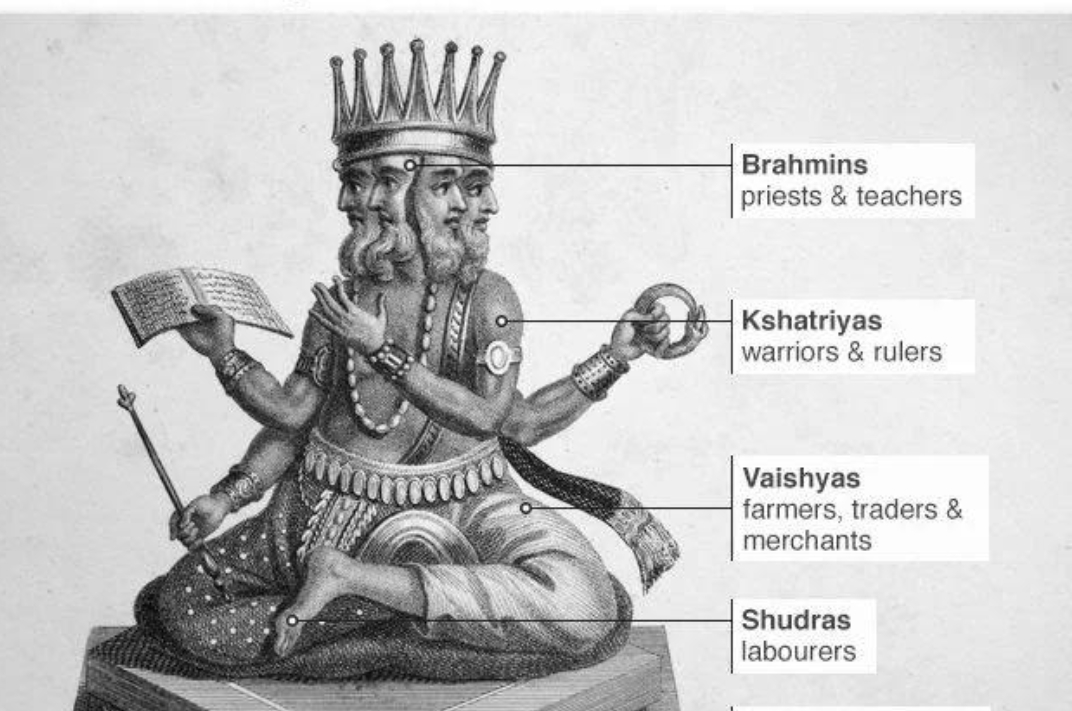
A clear example is inter-caste marriage. Traditional Hindu society (and to varying degrees other communities) strongly practised endogamy — marriage within the same caste or sub-caste — as a core norm tied to family, lineage, religious customs, and social order. Large sections of the population historically viewed inter-caste unions as against prevailing public morality and community cohesion. Surveys (such as older NFHS data and studies) show inter-caste marriages remain low — often estimated around 5–11% nationally, with higher rates in some urban or specific regions but still a minority practice overall. Caste endogamy continues to dominate.
The numbers, tracked across decades, confirm this is not a fading relic but a stable, reproduced norm. The 2011–12 India Human Development Survey found that 95% of Indians marry within their own caste — only 5% of marriages nationally cross caste lines, a figure that varies sharply by state (4% in Madhya Pradesh and Himachal Pradesh, against 13% in Gujarat and far higher in the Christian-majority Northeast, where caste itself carries less social weight). The most recent National Family Health Survey (2019–21) finds 86% of respondents married within their own caste category — meaning roughly seven in eight marriages in India today still follow the endogamous norm the Constitution's framers explicitly set out to dissolve. Even where the figure has crept up generationally — from about 7% of marriages before 1970 to roughly 13% in the 2019–21 cohort — researchers studying the trend found economic development, female education, and decades of legal incentive have moved the needle only marginally, and that where inter-caste marriage does occur, it overwhelmingly happens "between the two nearest caste groups in the social hierarchy" — meaning even the exceptions still obey the hierarchy's internal logic rather than breaking it. This is mass ideology holding its ground against seventy years of continuous state pressure, not mass ideology catching up to the state.
Yet the state actively enabled and, in spirit, promoted change:
The Hindu Marriage Act, 1955 (part of the Hindu Code Bills) removed caste as a legal barrier to Hindu marriages.
The Special Marriage Act, 1954 provided a secular route for any two adults to marry across caste or religion.
Some state governments offer cash incentives for inter-caste marriages, framing them as serving "national integration."
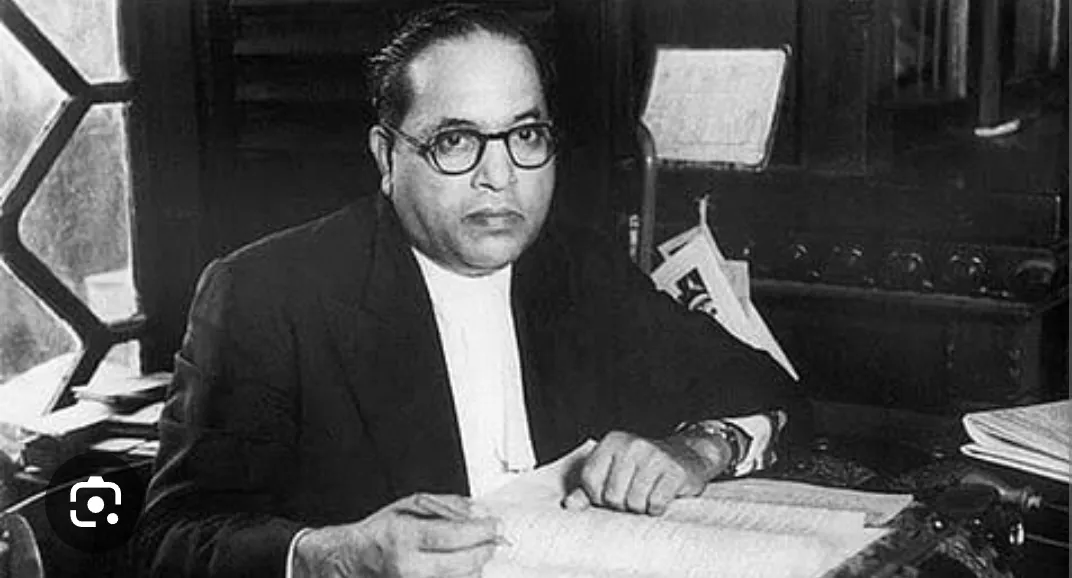
Dr. B.R. Ambedkar, a key framer and architect of these reforms, explicitly argued in Annihilation of Caste that inter-marriage was the real "solvent" of the caste system. He saw fusion of blood through such unions as essential to break endogamy and create kinship across divisions — beyond mere inter-dining or legal equality. The reforms were deliberate: the elite vision was to use law as a tool to weaken rigid hierarchies and build a unified, modern nation.
This was not a single law quietly passed and left to take its course — it was sustained as policy across generations, through legal removal of the caste bar in 1955, a secular civil-marriage alternative in 1954, and direct cash incentive schemes run by state governments decades later, all aimed at the same target the masses kept declining to move on. A reform repeated and re-funded across seventy years, against a stubborn 86–95% baseline, is not incidental modernization — it is evidence of an institution treating mass custom as something to be engineered out of existence rather than represented.
The masses, however, largely continued to follow their evolved customs. This is not "democracy" in the pure sense of reflecting the people's will on social matters. It is closer to an elite-guided project — a form of enlightened monarchy with a specific moral agenda, enforced through courts, laws, education, and incentives. Elected governments operate within this constitutional framework, often continuing the same transformative direction rather than fully deferring to mass sentiments on sensitive social issues.
Whether this top-down engineering has been good for India's survival and cohesion, or whether it has created lasting tensions between state ideals and lived reality, is a debate worth having honestly. But pretending Indian democracy is simply "rule of the people" without acknowledging this engineered gap misses the inherent problem. The state believes in equality. It is not democracy; it can't be democracy. It's a type of elites' monarchy with a special moral thought. As Friedrich Nietzsche warned:
The doctrine of equality! There exists no more poisonous poison: for it seems to be preached by justice itself, while it is the end of justice.
Saptarshi Pahari
280M.Sc. Physics student focused on Electronics | Independent researcher in structural philosophy & traditional history | Essayist & author of The Anatomy of Social Friction. Saptarshi Pahari is a traditionalist writer and analyst dedicated to the defense of orthodox Hindu theology

Comments & Discussion 1