When Krishna Became Arjuna: Illusion of Grief and the Lunar Hare
Due to our familiarity with the Bhagavad Gita, we have always viewed Bhagavan Krishna as the Guru, the eternal charioteer of Atman, who lifts off Arjuna ...
Due to our familiarity with the Bhagavad Gita, we have always viewed Bhagavan Krishna as the Guru, the eternal charioteer of Atman, who lifts off Arjuna Ji's grief of losing family in war from delusion towards the supreme wisdom. The core teaching is that a Guru remaining steadfast uplifts the shishya's sorrow by teaching the knowledge of the eternal, deathless and imperishable.
But what happens if the roles are reversed?
This play of role inversion is precisely what is written in ancient Buddhist literature Ghata Pandita Jataka. From Jagadguru to a Shishya this is what the mula of Jataka verses tell. In our discussion we will not discuss the polemic commentary attributed to Acharya Buddhaghosa of the 5th century, rather a decolonial approach towards what would be the earlier strata of interpretation.
It is with great confidence we say that this literary work was written in response to Bhagavad Gita because throughout the Mula Tipitaka it presents very limited information about the background story of these personalities except they were great figures of the past. As a reader you are already assumed to be familiar with the idea that Bhagavan Krishna is Keshava Ji and ruler of Dvaraka, Rohini Devi is mother of his brother Balarama Ji. The main character of this Jataka Bodhisattva Ghata seems to me was probably inspired by Gada Ji who is a younger brother of Bhagavan Krishna as he is presented as the younger brother of Bhagavan Krishna here as well.
The Great Inversion: Ghata Pandita Ji Becomes Bhagavan Krishna, Bhagavan Krishna Becomes Arjuna Ji
|
Bhagavad Gita |
Ghata Pandita Jataka |
|---|---|
|
Arjuna Ji was filled with grief and sorrow about losing family due to war. |
Bhagavan Krishna was consumed with grief of losing son. |
|
Bhagavan Krishna delivers the wisdom that would eradicate the root cause of sorrow. |
Ghata Pandita Ji teaches the lesson which would remove the sorrow. |
Bhagavada Gita celebrated for the famous Bhagavan Krishna's rebuke:
अशोच्यानन्वशोचस्त्वं प्रज्ञावादांश्च भाषसे ।
गतासूनगतासूंश्च नानुशोचन्ति पण्डिताः ॥२-११॥"You have grieved for those who should not be grieved for; yet, you speak words of wisdom. The wise grieve neither for the living nor for the dead."
Similarly In the Ghata Pandita Jataka, Bodhisattva Ghata Pandita rebukes as:
१७२. एवं चे कण्ह जानासि, यदञ्ञमनुसाससि;
कस्मा पुरे मतं पुत्तं, अज्जापि मनुसोचसि.१७२. एवं चेत् कृष्ण जानासि, यदन्यमनुशाससि।
कस्मात् पुरा मृतं पुत्रम्, अद्यापि मनुशोचसि॥If you know this so well, Krishna / Kanha Ji, and are capable of instructing another, why do you still mourn today for a son who died long ago?
The original message did not really make Keshava Ji look bad or anything. It looks more like a lesson about how even someone really wise can sometimes act in sorrow but it is the true beauty lies in overcoming it . A wise friend steps in when the teacher starts needing guidance instead.
I think the early Buddhist tradition kind of builds that despite how the 5th century commentarial tradition of Sri Lanka was unable to grasp that and wrote a polemic instead.
The Plot of the Ghata Pandita Jataka
The story opens in Dvaraka, the capital city of Varshneyas. It is the son of Rohini Devi (Balarama Ji) who rushes to the sleeping Bhagavan Krishna and says:
१६५. उट्ठेहि कण्ह किं सेसि, को अत्थो सुपनेन ते;
योपि तुय्हं सको भाता, हदयं चक्खु च दक्खिणं;
तस्स वाता बलीयन्ति, घटो जप्पति केसव.१६५. उत्तिष्ठ कृष्ण किं शेषे, कोऽर्थः स्वप्नेन ते।
योऽपि तव स्वको भ्राता, हृदयं चक्षुश्च दक्षिणम्॥
तस्य वाता बलीयन्ते, घटो जल्पति केशव ॥Arise, Bhagavan Krishna! Why do you lie asleep? What use is slumber to you? Your own born brother, who is like your very heart and right eye—his mind is disturbed. Ghata Pandita Ji is raving, Keshava Ji!
Bhagavan Krishna gets up fast with that heavy feeling from losing his brother. He runs into Ghata Pandita Ji out on the streets just repeating the same words about a hare like nothing else makes sense to him anymore. Bhagavan Krishna, believing his brother has truly lost his mind, offers everything with the generosity of a loving elder:
|
१६६.तस्स तं वचनं सुत्वा, रोहिणेय्यस्स केसवो; तरमानरूपो वुट्ठासि, भातुसोकेन अट्टितो. |
१६६. तस्य तद्वचनं श्रुत्वा, रोहिणेयस्य केशवः । त्वरमाणरूपो व्युदस्थाद्, भ्रातृशोकेनार्दितः ॥ |
Hearing those words from the son of Rohini Devi (Balarama Ji), Bhagavan Krishna arose in great haste, tormented by grief for his brother. |
|
१६७.किं नु उम्मत्तरूपोव, केवलं द्वारकं इमं; |
१६७. किं नून्मत्तरूप इव केवलं द्वारकमिदम् । |
Why do you wander all over Dvaraka acting like a madman, muttering "A hare! A hare!"? Tell me, who took your hare? |
|
१६८.सोवण्णमयं मणीमयं, लोहमयं अथ रूपियामयं; |
१६८. सौवर्णमयं मणिमयं लोहमयमथ रूप्यमयम् । |
I will have a hare made for you out of gold, or jewels, or copper, or silver, or from conch shells, stone, or coral. |
He offers hares from the wild forest. He offers every earthly substitute. But Bodhisattva Ghata Pandita Ji answers with the calm of one who has already won the argument:
१६९. सन्ति अञ्ञेपि ससका, अरञ्ञे वनगोचरा;
तेपि ते आनयिस्सामि, कीदिसं ससमिच्छसि.१७०.न चाहमेते [न चाहमेतं (सी.), न वाहमेते (स्या.), न वाहमेतं (पी.)] इच्छामि,
ये ससा पथविस्सिता [पठविंसिता (सी. स्या. पी.)]; चन्दतो ससमिच्छामि, तं मे ओहर केसव.
Sanskrit Chaya
१६९. सन्त्यन्येऽपि शशकाः, अरण्ये वनगोचराः।
तानपि ते आनयिष्यामि, कीदृशं शशमिच्छसि ॥१७०. न चाहमेतानिच्छामि ये शशाः पृथिवीश्रिताः ।
चन्द्रतः शशमिच्छामि तं मेऽवहर केशव ॥
English Translation
There are also other hares that roam the wild forests. I will have those brought to you as well. What kind of hare do you desire?
I do not want any of these hares that live upon the earth. I desire the hare from the moon. Bring that one down for me, Keshava Ji.
The Desire for the Unobtainable
Ghata Pandita Ji the Bodhisattva brings this out with just one verse. It is the great mirror of Alabhya Kama. That stands for desire aimed at what cannot be had. He holds it in front of Bhagavan Krishna.
१७१. सो नून मधुरं ञाति, जीवितं विजहिस्ससि;
अपत्थियं यो पत्थयसि, चन्दतो ससमिच्छसि
Sanskrit Chaya
१७१. स नूनं मधुरं ज्ञाते जीवितं विहास्यसि ।
अप्रार्थ्यं यः प्रार्थयसे चन्द्रतः शशमिच्छसि ॥
English Translation
My dear kinsman, you will surely lose your life.
You pray for the unprayable in desiring the hare from the moon.
The point here seems pretty clear that grieving over your son who died comes down to wanting the rabbit from the moon. It feels like you are hoping what gets born will just stay alive and never change. That connection or whatever it is supposed to last without end. Going after the kind of thing you cannot actually reach.
Mahabharata Udyogaparva (5.33.23) preserves this same teaching for wisemen as:
नाप्राप्यमभिवाञ्छन्ति नष्टं नेच्छन्ति शोचितुम् ।
आपत्सु च न मुह्यन्ति नराः पण्डितबुद्धयः ॥ २३ ॥
English Translation
Men of wise intellect do not crave that which is not reachable; they do not grieve over what is lost;
they do not become bewildered in times of trouble .
Bodhisattva Ghata Pandita Ji makes the principle explicit:
१७२. एवं चे कण्ह जानासि, यदञ्ञमनुसाससि;
कस्मा पुरे मतं पुत्तं, अज्जापि मनुसोचसि.
१७३. यं न लब्भा मनुस्सेन, अमनुस्सेन वा पुन [पन (पे. व. २१५)];
जातो मे मा मरी पुत्तो, कुतो लब्भा अलब्भियं.
Sanskrit Chaya
१७२. एवं चेत् कृष्ण जानासि यदन्यमनुशाससि ।
कस्मात् पुरा मृतं पुत्रमद्याप्यनुशोचसि ॥१७३. यन्न लभ्यं मनुष्येण अमनुष्येण वा पुनः ।
जातो मे मा मृत पुत्रः कुतो लभ्यमलभ्यकम् ॥
English Translation
If you know this so well, Bhagavan Krishna, and can instruct another, why do you still mourn today for a son who died long ago ?
That which can’t be reached by a person, or even by something non-human— the wish “my born son shouldn’t die ”, how can one obtain the unobtainable thing?
The Valmiki Ramayana (Ayodhyakanda 2.105.16) and the Mahabharata (Santiparvan 12.27.28–29) both declare the inevitable truth of impermanence:
सर्वे क्षयान्ता निचयाः पतनान्ताः समुच्छ्रयाः।
संयोगा विप्रयोगान्ता मरणान्तं हि जीवितम्॥ VR 2.105.16
संयोगा विप्रयोगाश्च जातानां प्राणिनां ध्रुवम् ।
बुद्बुदा इव तोयेषु भवन्ति न भवन्ति च ॥ MB 12.27.28
सर्वे क्षयान्ता निचयाः पतनान्ताः समुच्छ्रयाः ।
संयोगा विप्रयोगान्ता मरणान्तं हि जीवितम् ॥ MB 12.27.29
English Translation
All accumulations end in depletion; all elevations end in downfall.
Unions end in separation; life indeed ends in death.For those who are born, for living beings, union and separation are certain.
They exist and they do not exist, like bubbles in water.All accumulations end in depletion; all elevations end in downfall.
Unions end in separation; life indeed ends in death.
And the verse that strikes with the force of a vajra:
१७४. न मन्ता मूलभेसज्जा, ओसधेहि धनेन वा;
सक्का आनयितुं कण्ह, यं पेतमनुसोचसि.
Sanskrit Chaya
१७४.न मन्त्रा मूलभेषजा औषधैर्धनेन वा ।
शक्यमानयितुं कृष्ण यं प्रेतमनुशोचसि ॥
English Translation
O Krishna, neither by spells, nor by roots and herbs, nor by medicines or wealth,
can you bring back the departed one whom you are mourning ?
This verse resonates with the teaching of Mahabharata 12.317.11c–12a:
यस्मिन् न शक्यते कर्तुं यत्नस्तन्नानुचिन्तयेत् ।
भैषज्यमेतद् दुःखस्य यदेतन्नानुचिन्तयेत् ॥
English Translation
If nothing can be done about a matter despite one's best efforts,
one should not dwell upon it. Not dwelling upon it is the medicine for such grief.
The dialogue between the Bodhisattva Ghata Pandita Ji and Bhagavan Krishna deepens, turning toward the conduct of the wise when confronted with profound sorrow.
१७५.यस्स एतादिसा अस्सु, अमच्चा पुरिसपण्डिता;
यथा निज्झापये अज्ज, घटो पुरिसपण्डितो.
Sanskrit Chaya
यस्यैतादृशकाः स्युरमात्याः पुरुषपण्डिताः ।
यथा निध्यापयेदद्य घटः पुरुषपण्डितः ॥
English Translation
Would that one had such wise men for ministers, just as the wise Ghata Pandita Ji has made me understand today.
Pali Mula
१७६. आदित्तं वत मं सन्तं, घतसित्तंव पावकं;
वारिना विय ओसिञ्चं, सब्बं निब्बापये दरं.
Sanskrit Chaya
आदीप्तं बत मां सन्तं घृतसिक्तमिव पावकम् ।
वारिणेवावसिञ्चन् सर्वं निर्वापयेद् दरम् ॥
English Translation
I was truly burning, like a fire fed with ghee; he has extinguished all my anguish,
as if pouring water over me.
What is interesting about this verse is that the Fire and Ghee metaphor is even used in Mahabharata Adiparvan (1.80.9) for internal anguish.
न जातु कामः कामानामुपभोगेन शाम्यति ।
हविषा कृष्णवर्त्मेव भूय एवाभिवर्धते ॥
Desire is never pacified by the indulgence of its objects;
it only flares up all the more, like a fire fed with sacrificial offerings.
Even the paralysis of grief (the burning mind) example is used in Mahabharata Virataparvan 4.13.12
अपारयन्तं बत शोकमुद्यतं समुद्रवेगोषममातुरं भृशम् ।
Alas, I am unable to stem this rising tide of grief, which surges with the
intensity of an ocean and leaves me utterly overwhelmed.
The Somatic Fire of Grief is also found in Mahabharata, Shantiparvan (12.27.15)
तन्मे दहति गात्राणि यन्मां गुरुरभाषत ।
सत्यवाक्यो हि राजंस्त्वं यदि जीवति मे सुतः ।
सत्यं मा मर्शयन्विप्रो मयि तत्परिपृष्टवान् ॥तन्मे दहति गात्राणि यन्मां गुरुरभाषत ।
सत्यवाक्यो हि राजंस्त्वं यदि जीवति मे सुतः ।
सत्यं मा मर्शयन्विप्रो मयि तत्परिपृष्टवान् ॥What my preceptor said to me burns my limbs: "O king, you are a man of your word;
tell me, is my son alive?" The brahmin, seeking the truth, questioned me about this.
Pulling the Arrow: Grief, Wisdom, and Liberation
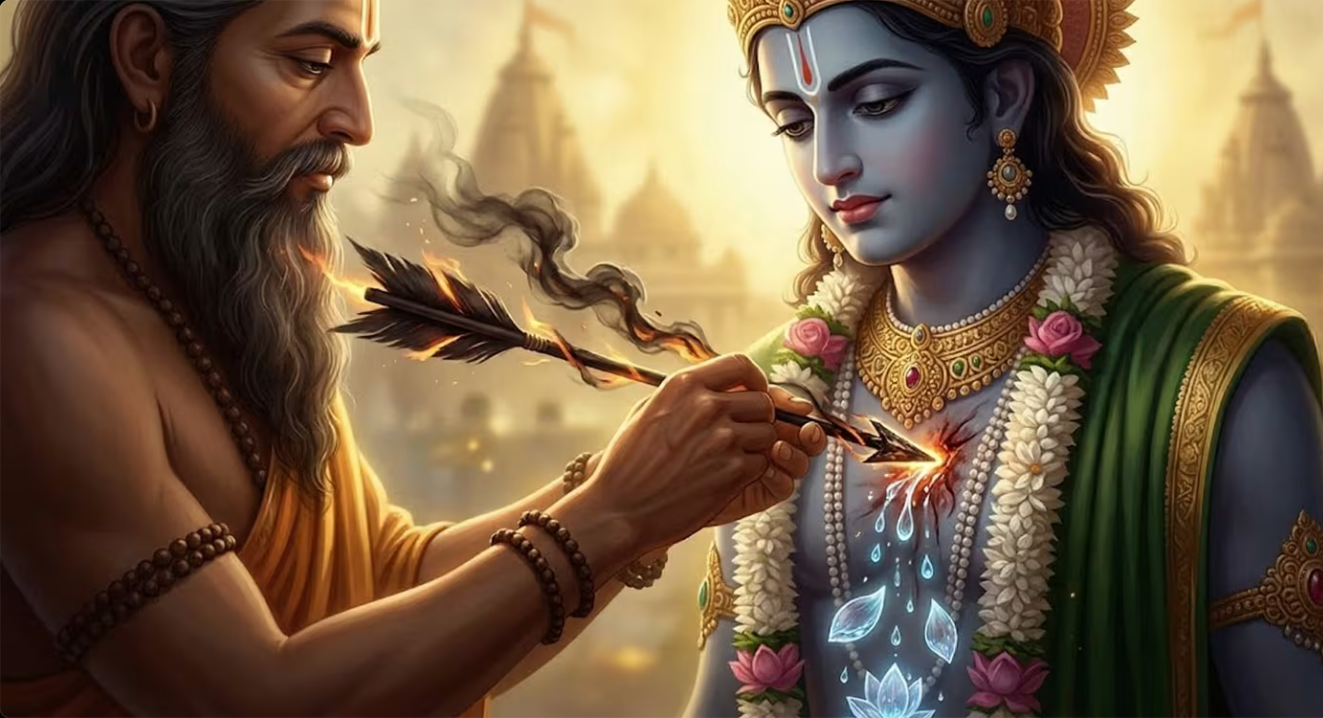
In Dharmic thought, grief is not just an emotion; it is a physical condition—specifically, a shalya, or an arrow lodged in the chest. This metaphor resonates across Pali Buddhist literature and Sanskrit epics like the Mahabharata and Ramayana, bridging sectarian boundaries.
The final verses of the Ghata Pandita Jataka provide a complete framework for understanding grief: its physical reality, its spiritual remedy, and the social duty of the wise.
The Arrow of Grief Is Real
१७७. अब्बही वत मे सल्लं, यमासि हदयस्सितं;
यो मे सोकपरेतस्स, पुत्तसोकं अपानुदि.आवृहद् बत मे शल्यं यदासीद्धृदयश्रितम् ।
यो मे शोकपरेतस्य पुत्रशोकम् अपानुदत् ॥"He has truly extracted the arrow of grief that was lodged within my heart, driving away the sorrow for my son that had consumed me."
The language here is surgical. The speaker does not say he was comforted; he says the arrow was extracted. This matches the Hindu understanding that shoka (grief) exerts a heavy, physical force. It is not a metaphor rather it is a lived experience of suffering.
The Hindu tradition confirms this radical somatic understanding of grief. The Mahabharata, in the Ashvamedhikaparvan, gives voice to the same bewildered anguish:
दुर्मरं बत वार्ष्णेय कालेऽप्राप्ते नृभिः सदा ।
यत्र मे हृदयं दुःखाच्छतधा न विदीर्यते ॥
"How strange it is, O Varshneya, that men do not die before
their appointed time that my heart does not shatter into a
hundred pieces from this grief."
The griever here is not speaking in metaphor. This is the Hindu recognition that shoka (grief) exerts a genuine, almost gravitational force upon the body. The heart should, by rights, break. That it does not is a source of existential wonder.
Putrashoka, or grief for a son, is particularly intense because it is the tearing of the most primal bond; a child is one’s dharma made flesh. Yet, the Jataka does not end in despair. It pivots to gratitude for the one who removed the arrow, reinforcing the idea that while suffering is real, the cure is equally tangible. The Valmiki Ramayana's Ayodhyakanda captures it in the image of Kaikeyi's inexplicable cruelty from Kausalya's perspective:
प्रस्थाप्य चीरवसनं पुत्रं मे वनवासिनम् ।
कैकेयी कं गुणं तत्र पश्यति क्रूरदर्शिनी ॥Having sent my son to the forest clad in bark garments, what virtue does cruel-visioned Kaikeyi see in this?
The Mind Unclouded
१७८. सोहं अब्बूळ्हसल्लोस्मि, वीतसोको अनाविलो;
न सोचामि न रोदामि, तव सुत्वान माणव [भातिक (पे. व. २२४)].सोऽहमाबृढशल्योऽस्मि वीतशोकोऽनाविलः ।
न शोचामि न रोदामि तव श्रुत्वान माणव ॥"With that arrow removed, I am free from sorrow and my mind is unclouded. Having heard your words, young man, I no longer grieve nor weep."
The word anavila means unclouded. Moving past grief is not just an emotional relief rather it is about regaining clarity of mind. In this tradition deep grief is a form of avidya / ignorance which acts like a fog which cloud’s mind’s eye. By removing this arrow of grief we are able to see things clearly once again.
The Mahabharata's Ashvamedhikaparvan (14.61.15–16) describes this exact transformation in Arjuna Ji, after the wisdom of the grandfather has been transmitted:
विबुधानां गतो लोकानक्षयानात्मनिर्जितान् ।
न स शोच्यस्त्वया तात न चान्यैः कुरुभिस्तथा ॥ १५ ॥
एवं पितामहेनोक्तो धर्मात्मा स धनंजयः ।
त्यक्त्वा शोकं महाराज हृष्टरूपोऽभवत्तदा ॥ १६ ॥See the progression, wisdom is spoken, grief is cast off, radiance appears. This isn't suppression of your emotions. It's transformation, the Dharmic insight that right knowledge is not just information to the intellect but changes the emotional body.
The Shantiparvan of the Mahabharata (12.215.28) bases this change on philosophy: the realization of impermanence:
वेद धर्मविधिं कृत्स्नं भूतानां चाप्यनित्यताम् ।
तस्माच्छक्र न शोचामि सर्वं ह्येवेदमन्तवत् ॥"I know the entire law of dharma, and also the impermanence of all beings. Therefore, O Shakra, I do not grieve — for all of this indeed has an end."
Anityata / Impermanence of the Samsara is the philosophical foundation of Hindus. It is not an equalizing oxymoron, but a liberating truth. It is not a life-denying attitude to accept that everything ends, but it is a freeing, a letting go of the attachments of sorrow.
The Mahabharata, Anushasanaparvan (13.150.80-82) goes further, and the embracing of death is presented as a demonstration of courage.
जीवितार्थं न शोचामि प्राप्तव्यं मरणं मया ।
जातस्य हि ध्रुवो मृत्युर्ध्रुवं जन्म मृतस्य च ।
तस्मादपरिहार्येऽर्थे न त्वं शोचितुमर्हसि ॥I do not grieve for the sake of life — death must come to me; for one born, death is unavoidable, and birth is unavoidable for one dead; therefore, you ought not to grieve for what is unavoidable.
This is the most condensed form (dharmic shoka-chikitsa) of the medicine for grief. Saying dhruva, dhruva (dhruva — certain, inevitable) takes away the strongest weapon of grief: the thought that death is an aberration, an injustice, an exception to how things should be. Rather than being violated, death is the deep grammar of existence, and putrashoka ceases to eat.
This is the language of stoic acceptance, even the great hero of the Ramayana, Kishkindhakanda (4.7.6), Sugriva speaks it:
मयापि व्यसनं प्राप्तं भार्या हरणजं महत् ।
न चाहमेवं शोचामि न च धैर्यं परित्यजे ॥I have suffered a great calamity: my wife has been taken away,
but I do not grieve in this fashion, nor do I forfeit strength.
That is not that the warrior is insensitive, but because dharma is an obligation and dhairya is dharma itself, the warrior is not able to grieve without end. Grieving is to give up one's post in the world.
The Duty of the Wise
१७९. एवं करोन्ति सप्पञ्ञा, ये होन्ति अनुकम्पका;
निवत्तयन्ति सोकम्हा, घटो जेट्ठंव भातरन्ति.
Sanskrit Chaya
एवं कुर्वन्ति सप्रज्ञा ये भवन्त्यनुकम्पकाः ।
निवर्तयन्ति शोकात्तं घटो ज्येष्ठमिव भ्रातरम् ॥
English Translation
This is what the wise and compassionate do: they turn one away from sorrow, just like Ghata Pandita Ji had freed his elder brother.
Rather than being devoid of feeling, the warrior avoids endless mourning because maintaining dhairya is a fundamental dharmic duty. To be overwhelmed by sorrow is to abandon one's proper role and duties in the world.
The wise's responsibility
१७९. एवं करोन्ति सप्पञ्ञा, ये होन्ति अनुकम्पका;
निवत्तयन्ति सोकम्हा, घटो जेट्ठंव भातरन्ति.
Sanskrit Chaya
एवं कुर्वन्ति सप्रज्ञा ये भवन्त्यनुकम्पकाः ।
निवर्तयन्ति शोकात्तं घटो ज्येष्ठमिव भ्रातरम् ॥
English Translation
Thus do the wise, who are compassionate, act; they turn away from sorrow, just as Ghata Pandita Ji’s elder brother (Bhagavan Krishna) did.
In this verse, we see the wisdom and compassion manifesting themselves in action: they seek to help people get away from their distress and endorse a path of liberation like Ghata Pandita Ji did for his brother Bhagavan Krishna.
Most important of all, this particular verse connects personal spiritual freedom with the ethics of the community. It implies that a wise, compassionate person has a moral commitment to pull the grieving out of the sorrow and this is what Ghata Pandita Ji did for his sibling.
This is a similar dynamic in function in the Shantiparvan (12.29.2-3) of the Mahabharata. After the war, when Yudhishthira Ji is disheartened, the sages and heroes convene in a council to keep him alive.
ज्ञातिशोकाभिसंतप्तो धर्मराजः परंतपः ।
एष शोकार्णवे मग्नस्तमाश्वासय माधव ॥ २ ॥
सर्वे स्म ते संशयिताः पुनरेव जनार्दन ।
अस्य शोकं महाबाहो प्रणाशयितुमर्हसि ॥ ३ ॥Yudhishthira Ji, the King of Dharma and scorcher of foes, is consumed by grief for his kinsmen. He is submerged in an ocean of sorrow; O Madhava Ji, please console him. We are all once again filled with doubt and uncertainty, O Janardana Ji. O mighty-armed one, it behooves you to destroy his grief.
The terminology employed is remarkable: Bhagavan Krishna is not simply requested to offer solace to Yudhishthira Ji, but is explicitly charged with the task of destroying his sorrow. This invokes the same clinical precision observed in Verse 177. Within the Hindu tradition, wisdom is characterized not as a gentle gesture of comfort, but as a potent tool for fundamental transformation.
There is a theoretical reason for this: According to the Strīparvan of the Mahābhārata (11.2.21), this is due to their personalities.
प्रज्ञया मानसं दुःखं हन्याच्छारीरमौषधैः ।
एतज्ज्ञानस्य सामर्थ्यं न बालैः समतामियात् ॥ २१ ॥Through wisdom, one should strike down mental suffering; through medicines,
one should strike down physical suffering. This is the power of knowledge—
one should not fall into an equality with the foolish.
This is one of the profoundful verses in the entire Mahabharata on the topic of suffering. What the physician does to the body, the wise counsellor does to the mind: what he does to the body is medicine; what he does to the mind is prajna the wisdom.But more importantly this power is not present for the ignorant..It is a medicine that can be administered only by the one who has a wisdom.
This is the social aspect of the Dharmic conception of knowledge. Wisdom is not only a personal discovery, but a call to action that involves a compassionate response. The Mahabharata, Shantiparvan (12.317.9-10), is very clear about the way of the truly wise in regard to the problem of grief:
मृतं वा यदि वा नष्टं योऽतीतमनुशोचति ।
दुःखेन लभते दुःखं द्वावनर्थौ प्रपद्यते ॥ ९ ॥
नाश्रु कुर्वन्ति ये बुद्ध्या दृष्ट्वा लोकेषु संततिम् ।
सम्यक् प्रपश्यतः सर्वं नाश्रुकर्मोपपद्यते ॥ १० ॥Whether a person has died or is lost, he who grieves for what is past gains only suffering through suffering; he thus encounters two misfortunes.
Those who, through their wisdom, have seen the continuity of the worlds do not shed tears. For one who perceives everything correctly, the act of weeping is not appropriate.
Grief can come in two ways and consequently two misfortunes can further afflict one: Firstly, the sorrow of the dead increases one's suffering. Secondly, the Wise who are themselves aware of this perpetual state of being which is the unending cycle of birth and death and that the beings are free from this kind of suffering.
The great Rishi Vyasa Ji enacts this duty in the Shantiparvan(12.27.26) itself:
वैशंपायन उवाच ।
तमेवंवादिनं पार्थं बन्धुशोकेन विह्वलम् ।
मैवमित्यब्रवीद्व्यासो निगृह्य मुनिसत्तमः ॥ २६ ॥Vaishampayana said: To Partha (Yudhishthira Ji), who was speaking thus, overwhelmed by grief for his kinsmen, the best of sages, Rishi Vyasa Ji, having restrained him, said, "do not let it be".
The three terms (ma evam iti) "do not let it be". The sage provides no lengthy discussions; but instead, he restrains, redirects and turns the sorrower away from the edge of the abyss. The essence of Ghata has been distilled down to this.
This will be the continual pattern throughout the Dharmic universe; Rishi Vyasa Ji addresses Yudhishthira Ji, Bhagavan Krishna addresses Arjuna Ji, Ghata Pandita Ji addresses Bhagavan Krishna. It is the same act; however, the names change.
Thus, the view of liberation within Hinduism is the same as in the previous two examples: through compassion as members of a community; through wise individuals redirecting those who experience pain back toward the light just as they did when the world began and continue to provide this process for future generations.
Conclusion: The Universal Language of Healing
The Ghata Pandita Ji Jataka provides not only a clever reverse image of the well-known story in the Bhagavad Gita but is also a profound reflection on how much suffering exists in this world and how effective Dharmic wisdom can be at addressing it. The Jataka reforms the archetypal image of Bhagavan Krishna as the "stand-in" for the emotional state of the griever, thus stripping Bhagavan Krishna of his divinity, and has him face-to-face with the realness of the embodiment of the grief associated with witnessing the death of one's child or putrashoka.
The coherence of a singular philosophy of liberation across the Jatakas and the other traditional Sanskrit literature is clear: the source of the suffering in the mind (avidya) causes a "grief-mark" (shoka) to be lodged in the mind, and the remedy for that grief is not to deny the grief, but to come to terms with the anityata (impermanence) of life.
In conclusion, one of the main messages of the Ghata Pandita Ji Jataka is that the wise have a sacred obligation. The path to freedom is not often something that can be achieved alone; it requires working together with others in an act of collective inclusion. The wise man, through his capacity for compassion, presents a mirror in which we can see our own truths and removes the arrow from the heart to restore clarity. The message from Ghata Pandita Ji, Bhagavan Krishna, Rishi Vyasa Ji, and Yudhishthira Ji is that when we are in the flames caused by our own attachments, the wise person is the water which extinguishes those flames. Sorrow as an inherent aspect of life will always exist; however, our ability to gain wisdom regarding how to move beyond it is the fundamental characteristic of living in accordance with Dharma.

Sachit Varshney
120Advaita Vedantin with a passion for non-dual philosophy, exploring Hindu thought beyond Hindutva, orthodoxy, reformism, or Ambedkarite frameworks. Enthusiast of Sikh and Buddhist texts, weaving insights across traditions with curiosity and depth.

Comments & Discussion 2