The Real Meaning Of Ahimsa
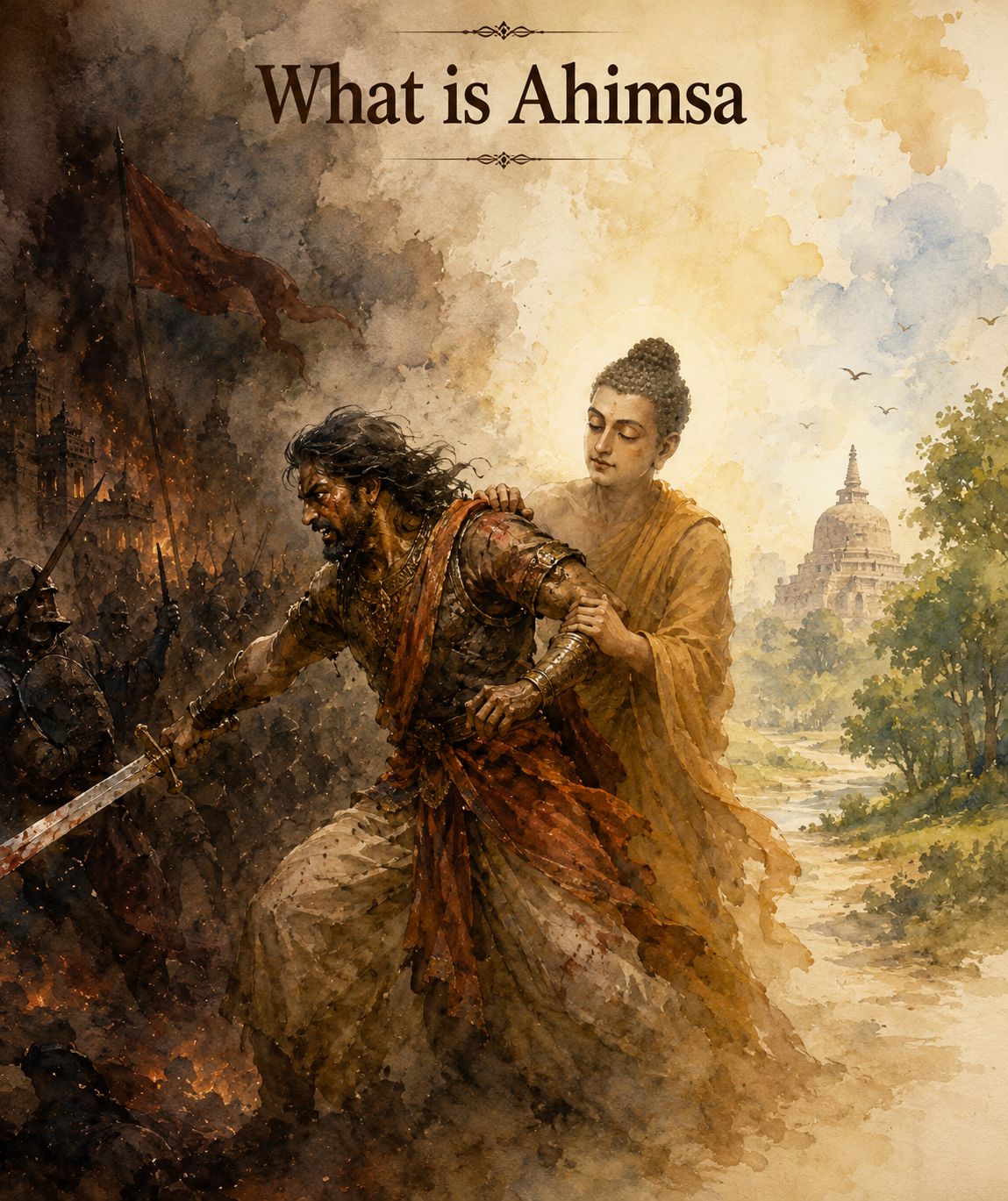
Ahimsa, for most of us, it's a picture of someone standing still, someone who refused to fight back, someone who just tolerate whatever is thrown at t...
Ahimsa, for most of us, it's a picture of someone standing still, someone who refused to fight back, someone who just tolerate whatever is thrown at them. We have been told for generation that to be non violent is to be passive. We look at the history of Buddhist Kingdoms, where we are deep, spiritual traditions of piece were held so dearly that, when the tides of history turn an invaders arrived , those civilizations were left defenceless wiped out because they believe that if they didn't hurt anyone, no one would dare to hurt them.
They thought everywone as good as they were, but history is a brutal treat. It proved that in a world of wolves, being a lamb is not a Virtue, it's a fatal mistake.
But today, I want to challenge that I want to talk to you about the version of Ahimsa that doesn't get talked about enough, because in Hindu tradition, the story of Ahimsa is entirely different. It isn't about being victim. It's about having a power to destroy it, choosing to protect its time. We stop confusing non-violence with non resistance.
THE HISTORY WARNING: When Idealism Becomes a Trap
If we look at history , we can see that rigid passive version of non violence has sometimes cost civilizations their survival. History provides some sobering examples of how this played out.
One of the most famous examples is the destruction of Nalanda university in 12th century, Nalanda was the heart of Buddhists learning.While it was a centre of peace , it lacked military protection to survive the waves of invaders who waved monastic structure as a soft target. Another example is of Tibet, throughout its history , tibet focuses on monastic life and religion governance sometimes left it fragmented. When powere is entirely tied to religious institutions and eschew military forces, it becomes difficult to hold off neighbors who have strong, aggressive armies.
Now let's talk about shifts in India, many thinkers have argued that when large section of the population, especially the Warrior clash khatriya, became overly focused on purely monastic non viololent ideologies, the society gradually lostes material spirit. As a central authority weaken , the region become more easier for foreign powers to enter and conquer.
These examples aren't mean to blame Buddhism, but they are lessons about governance. A Kingdom is not a monastery. A Kingdom has a responsibility to protect the people who lives within it.When a state focuses personal non-violence with a national defence policy, it often leads to disaster. If we ignore the reality of human aggression, because you want to believe everyone is good , you aren't being enlightened, you are being naive and idiot.
So what is real Ahimsa?
Real Ahimsha isn't about running away from trouble or acting like a punching bag. It is about trying your best to avoid violence in your daily life.
Ahimsa is a choice not a compulsion, you choose not to start fight, you, choose not to use harsh wood. It is your default setting. IN YOUR DAY TO DAY LIFE, IF SOMEONE SAYS SOMETHING RUDE TO YOU HAVE THE STRENGTH TO IGNORE IT AND MOVE ON, THAT'S REAL AHIMSA.
But What About Self-Defense?
This is most important part. Ahimsa doesn't mean you have to be cowred. If someone comes to attack you or tries to kill you, defending yourself is not Violence, it is your Dharama, to protecting life given by God to you.
1. You never start the fight.
2. You defend when necessary.
3. No hatred in your heart: You are do it because it’s the right thing to do, not because you enjoy hurting others.
Final Thoughts
Don't let the word non violence , fool you into thinking it means non - resistance. True Ahimsa is about being a person of peace who is also prepared for war. It is about having the strength to protect your peace.Rather than hoping that others will respect it.

Saffron Files
422




Comments & Discussion 1