Popular:
The Truth Revealer

Myth vs Reality

Debunking common misconceptions about Sanatana Dharma through authentic scriptures.

Hindu intolerance towards Buddhism – Fact vs Myth
Buddha
• Evidence-Based

Hindu intolerance towards Buddhism – Fact vs Myth

Myth

Ancient Hindu texts explicitly command violence, hatred, and social exclusion toward Buddhists, indicating a state of constant religious warfare.

Fact

Hindu scriptures were fueling violence and separation of Buddhists, say critics. The Buddha comes across as a demon deluder in those passages. His disciples are to be sentenced to hell. Monks are an untouchable caste who make a ritual null and void.

The "Exercise-Only" Reduction of Yog.
Evidence Based
• Evidence-Based

The "Exercise-Only" Reduction of Yog.

Myth

Yoga is a physical fitness regime or a form of gymnastics that focuses solely on stretching, toning the body, and cardiovascular health.

Fact

Physical exercise is merely a small, modern subset of a vast, ancient system designed for spiritual, mental, and psychological liberation. The physical postures (asanas) were traditionally intended only as a preparation to steady the body for prolonged meditation, and their transition into a "fitness product" is a direct result of colonial-era cultural syncretism and modern consumerist ideology.

BIG LIE about Bajarangbali
Evidence Based
• Evidence-Based

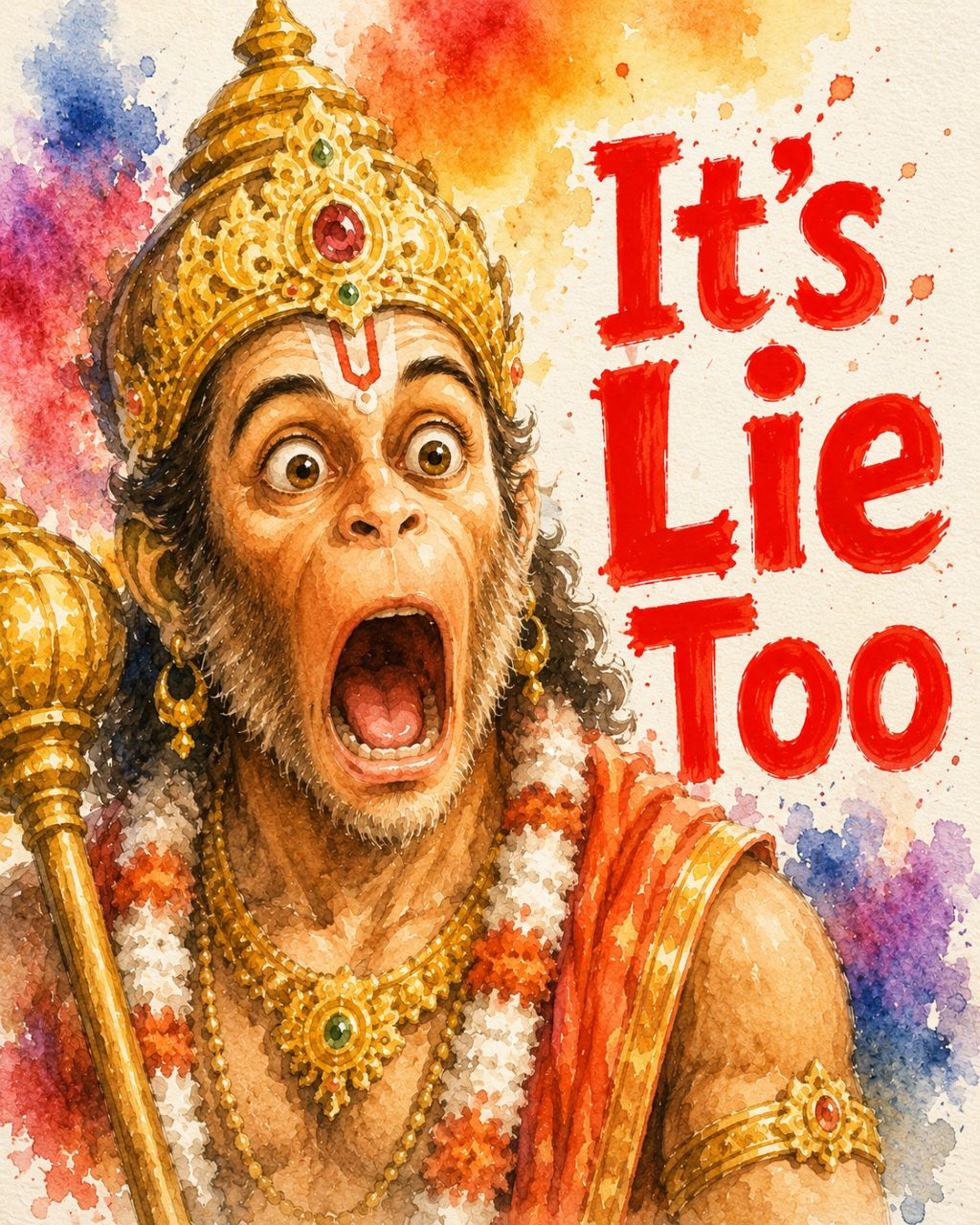
BIG LIE about Bajarangbali

Myth

Hanuman ji carried a GADA throughout the Lanka war and used it against Ravna's Army. Exactly as commonly shown in the modern painting, television series, comics aand statues.

Fact

The earliest and the most authoritative source for the Ramayan, the Valmiki Ramayan, does not describe Hanuman ji as carrying permanent GADA during a battle in Lanka. Instead, Hanuman ji is repeatedly described using his fist, his feet , his nails, trees , rocks , mountain peaks , pillars and etc, but not Gada.  The image of hanuman ji, constantly wielding a gada, become widespread in later devotional traditions, temple iconography, medieval literature and modern visual representations.

ARE THEY DIFFERENT
Evidence Based
• Evidence-Based

ARE THEY DIFFERENT

Myth

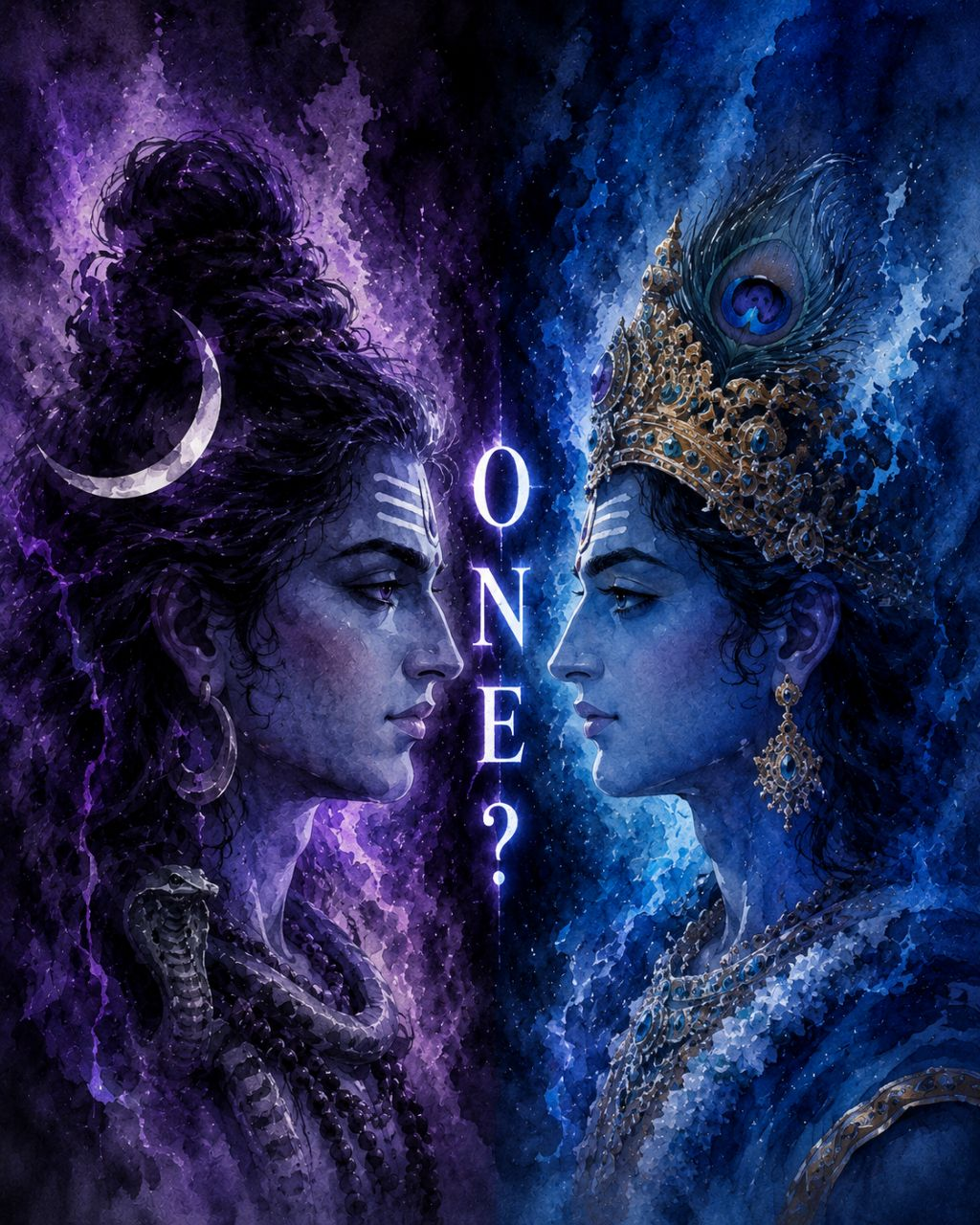
Many people claim that Shiv and Vishnu are completely different gods, rival deities from folklore and cultural stories. In hese stories Shiv is seen as the ascetic destroyer and Vishnu as protector, so people pass the statement that Shiv and Vishnu are opposite forces.

Fact

The original secret text explains that shiv and vishnu earth actually two different aspects of the one exact same ultimate reality. They are complete dependent on one another much like water and ice or two sides of single coin. There is present different functions of the same cosmic energy , rather than a separate beings. To show this truth visually ancient tradition created a form of harihara , a single deity that is half Shiva and half Vishu.

Is Hinduism polytheistic? The truth behind 33 Koti Devas.
worship
• Evidence-Based

Is Hinduism polytheistic? The truth behind 33 Koti Devas.

Myth

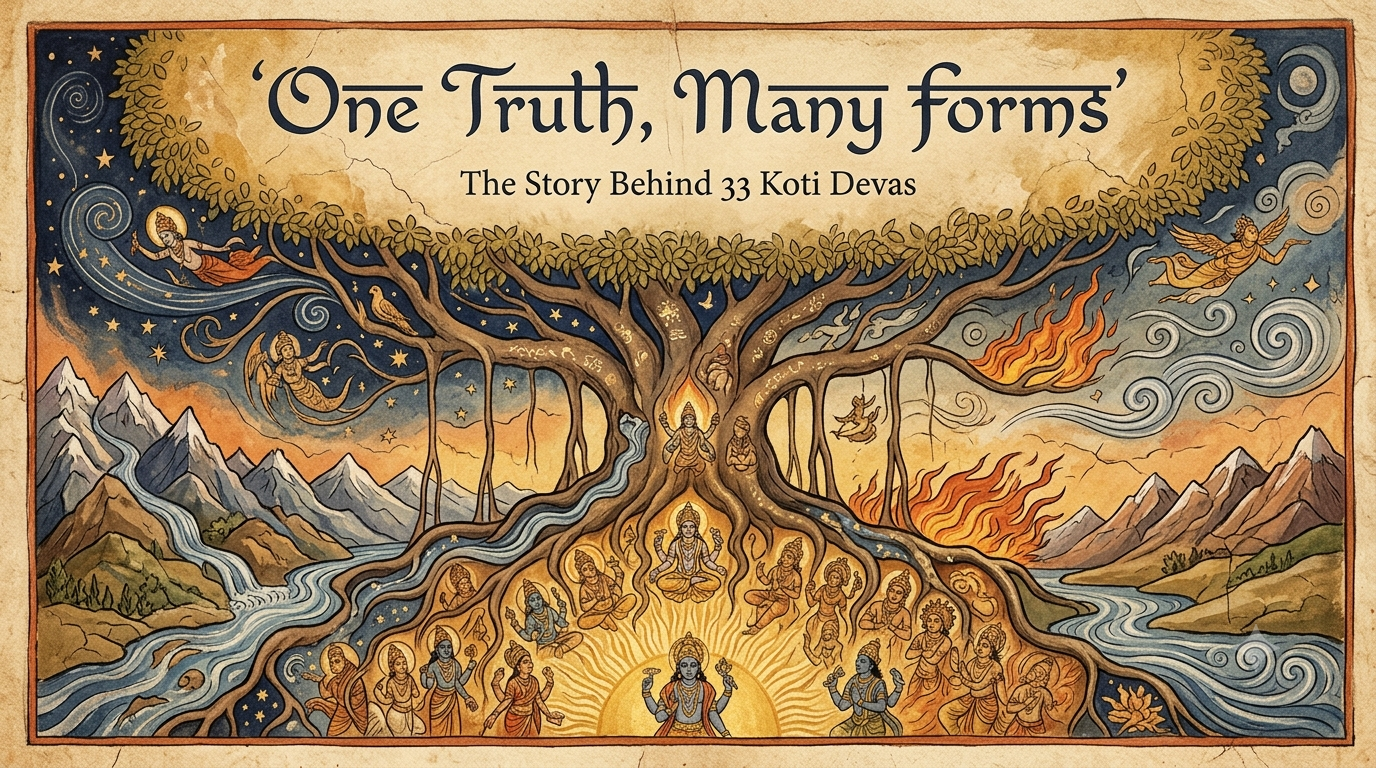
'33 Koti' ka matlab sirf 33 Crore Gods hota hai Ya 33 koti ka matlab 33 Types Hai.

Fact

"Koti" ek Sanskrit shabd hai jiske context ke hisaab se alag meanings ho sakte hain. Vedic texts 33 principal divine categories ka varnan karte hain, jo ek hi Supreme Reality (Brahman) ki abhivyaktiyan hain.

Ravan Is Dalit
Myths of Ravan
• Evidence-Based

Ravan Is Dalit

Myth

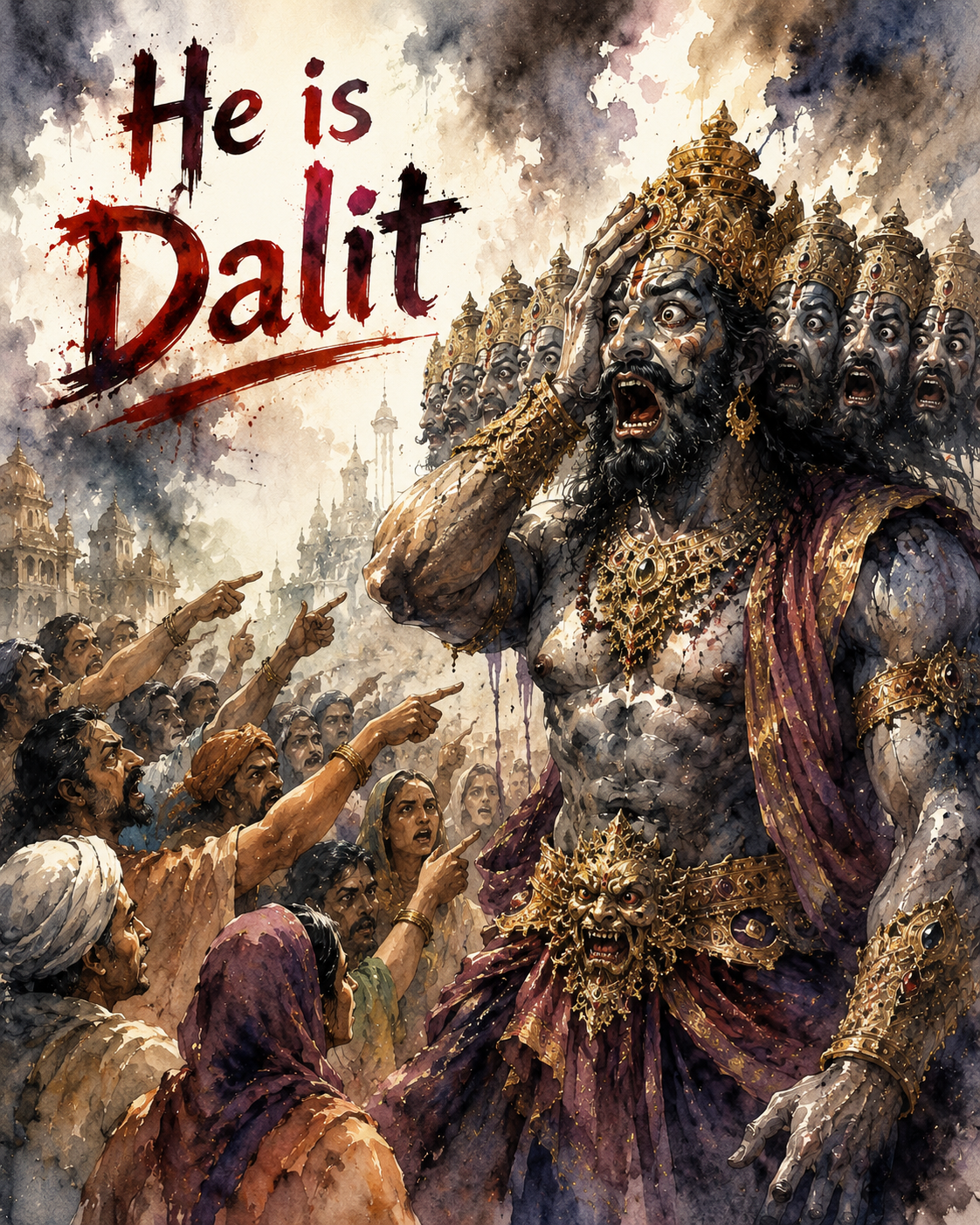
In recent socio political discoveries, certain fringe groups, claim that Ravan was Dalit(A low caste). According to this modern claim, The War in Ramayan was not a battle of Dharma (righteousness) versus Adharma (unrighteousness), but rather a conflict where a Dalit King (Ravan) was demonized and slain by a dominant caste prince (Lord Ram).

Fact

A straight forward answer, this claim is completely false and is entirely unsupported by any classical Hindu Texts, including the original Valmiki Ramayana, the Puranas or regional recensions like the Kamba Ramayana.  Scripturally, Ravan was a Maha-Brahmin (a Brahmin of the highest order) by paternal descent. He was highly reversed for his supreme knowledge of the four Vedas, his mastery over the arts and his extreme devotion to Lord Shiv. The lebal of Rakshasa(Demon) attributed to him in Hindu Scriptures does not denote a low social caste or an untouchable status, rather it refers to his maternal species and his unrighteousness behavior traits.

Ravan was a 'Gentlemen'.
Myths of Ravan
• Evidence-Based

Ravan was a 'Gentlemen'.

Myth

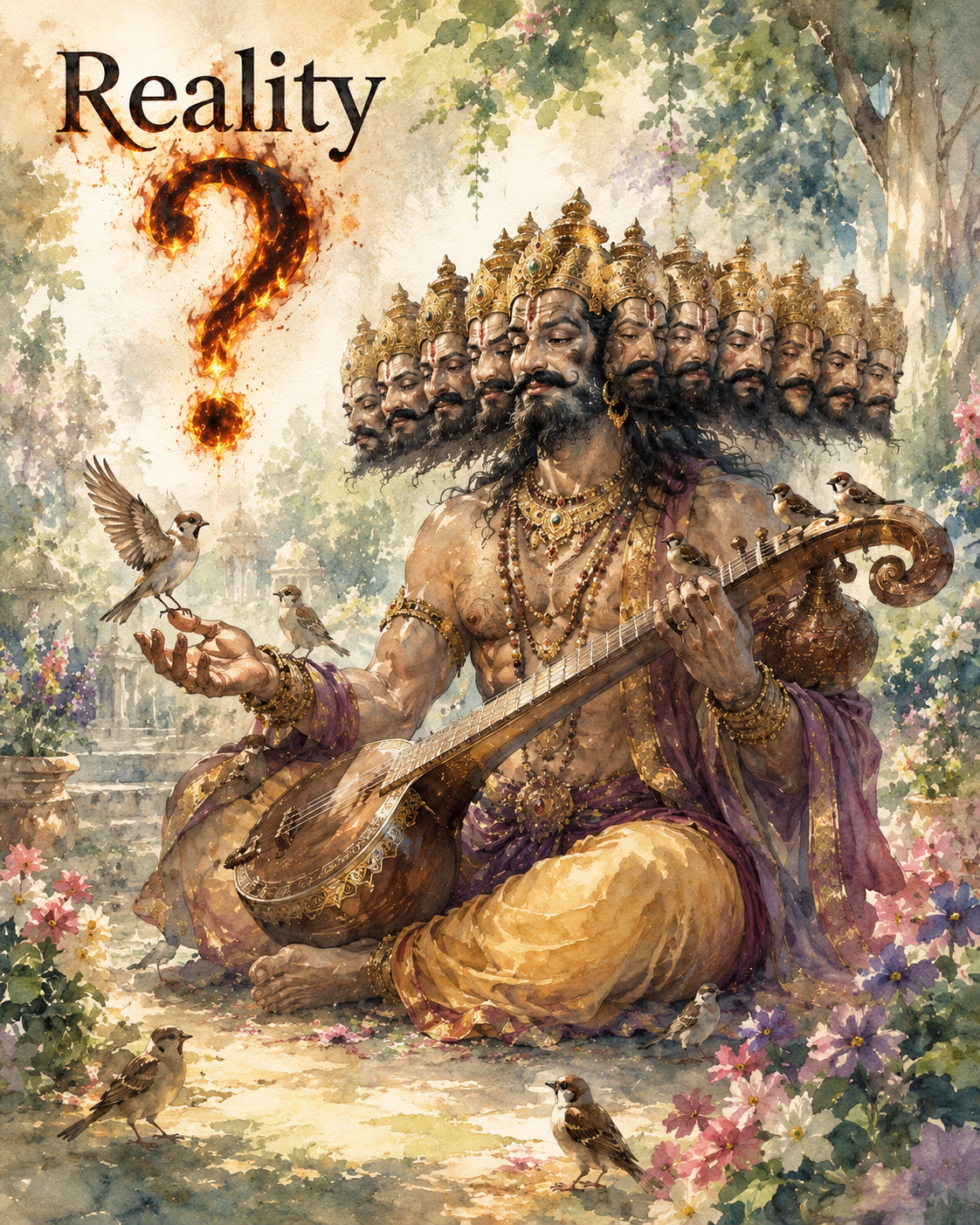
Ravan was a highly educated gentleman. Even though he kidnapped Sita, he never touched her or forced himself upon her because he respected women and had a strict moral code.

Fact

The Reality is that Ravan did not spare Devi Sita out of RESPECT or GENTLEMENLY BEHAVIOR.  He kept his distance strictly due to a terrifying curse that that would instantly end his life if he ever forced himself upon any woman again. Far from being a gentleman, original texts like The Valmiki Ramayana explicitly record that Ravan was a serial offender who had assaulted, molested and raped numerous women throughout his life.

Lie About Hanuman Chalisa
Pedo Science
• Evidence-Based

Lie About Hanuman Chalisa

Myth

Hanuman Chalisa Contains the Exact Distance from Earth to Sun

Fact

A popular internet claim asserts that the 16th century devotional hymn Hanuman Chalisa, composed by Goswami Tulsidas, accurately calculated the distance between the Earth and the Sun centuries before modern astronomy. Supporters of this Theory focus on the line:                     《Yug Sahastra Yajana Par Bhanu》 and interpret it as a mathematical formula: >Yug = 12,000                              >Sahastra = 1,000                      >Yojana = 8 miles  Calculation:                        12,000 × 1,000 × 8= 96000000miles     Since the average distance between the Earth and the Sun in approximately 93 million miles, it is claimed that the Hanuman Chalisa contains advanced astronomical knowledge.    Now let's see Reality :                  The Claim is based on a modern reinterpretation of a devotional verse rather than the original meaning intended by the author. In traditional commentaries and authoritative translations,  including those published by 'Gita Press', the verse is understood as a poetic description of Hanuman Ji's extraordinary power and divine abilities.  The line refers to the famous episode from Hanuman ji's childhood when he mistook the Sun for a ripe fruit and leaped toward it. The verse does not present a scientific equation, astronomical calculation or hidden numerical code. Its purpose is devotional and narrative rather than scientific. 

卐 HinduText AI